Feeding our spirits

I’m just back from the Festival of Homiletics in San Antonio. It was, without question, a minister nerd-fest. Who else would have a “festival” about “homiletics,” which is just a fancy name for preaching.  And yet there we were – 1800 ministers from many denominations across the country, ready for four and a half days of worship, sermons, and lectures.  It truly was an event that perhaps only a preacher could love. And it was fabulous a time for learning, inspiration, and renewal.

Let me tell you why worship-leaders enjoy going to worship –

  • Someone else chooses the hymns. And if people don’t like them, it isn’t my fault.
  • Someone else prepared the bulletin. And if there are mistakes, it wasn’t me.
  • Someone else wrote all the litanies, responses, and prayers. All I had to do was show up and soak it all in.
  • Someone else preached. I happen to love to preach, but it is a delight to cherish some moments when I’m not responsible for reading the text, grappling with the meaning, studying commentaries, finding instructive illustrations, or coming up with compelling stories.

And perhaps the best thing of all – if something goes wrong (which it did), I can simply sit in my seat and wait for someone else to resolve the issue. So, when all 1800 ministers were eagerly anticipating a PowerPoint presentation and suddenly the screen went black, I could laugh. I could be confident that the team of tech people would rally to rectify the situation – which they did – or that someone else would have to come up with a “Plan B.” There was something very relaxing and gratifying about sitting in the pews and being invited to simply listen and learn.

The conference provided much food for thought. I was immersed in new worship ideas, introduced to new hymns (I think) our congregation will enjoy, heard inspiring sermons, and was challenged to stretch my theology as we wrestled with our ancient texts providing insights for a very modern world. It was a wonderful, educational, inspiring week.

And yet – there was something humbling about listening to one gifted, talented, inspiring preacher after another. It is not easy to hold over 1000 people spellbound, yet I witnessed a number of preachers and professors who managed to do just that. Many of them were available afterwards to sign copies of their recent books.  These were teachers and preachers who travel the globe delivering their messages and then return to their mega-churches and over-subscribed classes.

A gnawing, unwanted doubt began to seep in to the congregation primarily made up of small town preachers and pastors shepherding struggling congregations.  How, we wondered, could we ever measure up to such greatness?

There is great danger in comparing yourself to anyone else. We tend to romanticize the other’s success and popularity as we diminish our own abilities and service. We mistakenly believe that they “have it all” while we struggle to accomplish anything.

Here’s the conclusion that many of us reached during this conference – God does not call any of us to be famous, popular, or successful. God calls each one of us to be faithful. God calls us to receive and then to share a message of love, forgiveness, and the ability to start over – again and again. And that’s true whether you are a minister, a teacher, an auto-mechanic, stay-at-home parent, or rocket scientist.

We all need an opportunity for a spiritual “tune-up,” a time to be renewed and refreshed. My prayer for each one of us is that we can find ways to feed our spirits – whether it’s at a conference or gazing out of the beauty of God’s creation – and discover again that loving voice that invites us to simply receive God’s love, and then to share it any way we can.


 

Love shouldn’t hurt

Domestic violence was the topic in worship last Sunday. Our Lenten celebration of kindness and loving our neighbor was punctuated by the reminder that love shouldn’t hurt.

Now, that may seem obvious to you. Yet Patty Sue Brown, an advocate for our local domestic violence shelter, shared startling statistics with us. They are eye-opening.

  • 1 in 4 women will experience domestic violence in her lifetime.
  • Domestic violence is the 3rd leading cause of homelessness.
  • Women ages 18-34 are at the greatest risk of being victims of domestic violence.
  • Every 9 seconds a woman in the United States is a victim of domestic violence (the rate is even higher in other countries).

It was difficult to hear about pain happening all around us. Some folks wondered if this was a proper topic for a Sunday morning sermon. There were, after all, children and young people present. But this is a message for all ages and a topic we can’t ignore.

We learned that February is designated as “Teen Dating Violence Awareness Month.” It gives one pause to realize that such an awareness campaign is necessary. We want to encourage people of all ages to recognize the warnings signs. The power wheel illustrates that violence is not limited to physically hitting or grabbing someone.  Controlling behavior, causing another person to feel isolated or devalued, and words that belittle or shame are all on the violence spectrum.

Domestic violence 2As beloved children of God, each of us deserves to be treated with respect and dignity. We need to care for ourselves and be mindful of the needs of our neighbor.
During that same worship service, we heard the parable of the Good Samaritan, that unlikely hero who sees a person in need and responds with kindness and compassion. The story reminds us to actually see one another and recognize signs of distress and hurt. The Samaritan’s willingness to reach out to a stranger saved that person’s life.

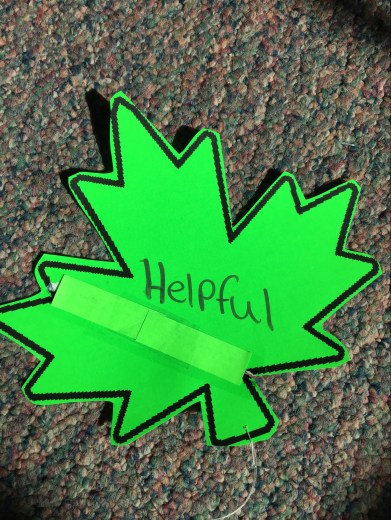
The leaf added to our Kindness Tree this week was “helpful.” We offer ourselves as the hands of Christ, reaching out to all of God’s people.

img_1460.jpg

DOMESTIC VIOLENCE HOTLINES:  860-774-8648 / 860-456-9476


Celebrating our “Kindness Tree”

A tree grows in our sanctuary.  Actually, it is pretty barren right now, with a single paper leaf dangling on it.  This is our “Kindness Tree.”  During the season of Lent we will be talking with our children and congregation about how we live out Jesus’ command to “love our neighbors as ourselves.”  Each week we will add another leaf to celebrate acts of kindness. And together we will wonder – How do we live kindness?  How do we share kindness?

In the midst of the excessively nasty rhetoric in the news and social media these days, it is important for the church to offer another voice, an alternate tone, and a different viewpoint. There are few public figures that I as a parent would lift up to my children as viable, admirable role models. There are words and phrases spewed across the airwaves that we would not allow our Sunday School children to repeat. And there are attitudes and hateful opinions that contradict the Gospel of love and new life that we cherish.

What’s a church to do?

We can offer a new conversation. We can encourage our children to listen to the life-giving voice of the One who created them and loves them unconditionally. We can be inspired by Jesus who always reached out to the outcasts, shared meals with the shunned, and healed the forgotten, the lonely, and the hurting. We can try to follow his footsteps.

We can live kindness.

Every week during Lent we will listen to stories and examples of people who make a difference in someone’s life. Our role model will be the Good Samaritan who had the wisdom to recognize a beaten, abused man left on the roadside as a beloved child of God. The Samaritan was himself part of a reviled group of people; popular opinion labelled him as a subhuman who should be feared.

The Samaritan didn’t allow others to define him. He didn’t listen to their narrative and wasn’t swayed by their opinion. Instead, he lived his truth.

He shared loving kindness with a stranger.

Sometimes people talk about “giving up” something for Lent and it may be that weaning ourselves away from the endless negative chatter would be a good start. But perhaps adding something to our lives would be even more important.

  • We can speak words of kindness.
  • We can share acts of thoughtfulness.
  • We can remind one another – friends and strangers – that we are created in the image of God.
  • We can be gentle with one another.
  • We can encourage each other.
  • We can wonder if a person we encounter is going through a difficult time.
  • We can extend grace.

Every day between now and Easter, let’s make someone’s life a bit better.

As Aesop reminds us, “No act of kindness, no matter how small, is ever wasted.”

Kindness tree 1


Hugs from strangers

The sounds of an emergency room are unmistakable. The swift footsteps of nurses as they hurry into a room. Machines beeping an urgent rhythm as they track heartbeat, pressure, and the flow of medicines. Doctors issuing orders. And all the while, loved ones endure an anguished wait.

As a volunteer chaplain at our local hospital, I am on-call for a weekend every month so that our hard-working chaplain can take a much-needed break. When a call comes in, I know it will be urgent. Often it is a family requesting a priest who can administer last rites.  I used to explain to the nurse on the phone that I was not a priest and therefore was no in position to offer Catholic sacraments. But over the years I have learned that most people yearn for any assurance that God is with them in a time of crisis. Even when the person delivering that assurance is a female Protestant minister.

Early in the morning, I huddled with a family, separated from their loved one only by a thin floor to ceiling curtain. We could hear the effort that was being put in to save this particular life. Calm but urgent voices counted CPR beats as carts were wheeled in to supply additional support.

And then – silence. Talking stopped. Machines were turned off. The hurried steps of these brave first responders ceased. The curtain was drawn back and the dreaded sentence was spoken, “I’m sorry; we did everything we could.”

That’s when grace enters in. Suddenly these strangers became the first comforters. Nurses came to offer hugs. Doctors stopped to offer condolences. The ambulance driver brought in chairs so the overwhelmed family could rest. Someone offered coffee, another brought in a pitcher of water. This was compassion brought to life.

Names were not necessary. In that moment kindness ruled. Everyone was aware that this was someone’s mother. Someone who had made breakfasts for decades and worried when her children came home late. Someone who played cards with neighbors and was always ready to offer a cup of coffee and a listening ear.
And now she was gone. Just like that. With no warning.
Tears ran down cheeks of people who may not have even known her name. Strangers gave hugs. And the family received comfort.
Living kindness and offering compassion is what we are called to do as human beings. The need for love is greater than all that divides us. Thoughts of which political figure was supported or disdained disappeared. We were just people together, confronting the fragility of life.

In that moment of life and death, love prevailed. Compassion, care and comfort were freely given.

It reminded me of how we are meant to live – with the ability to care for our brothers and sisters around us.  Even the ones we may not know.


The March – my experience

My bad feet survived.

My spirit soared.

It was thrilling to gather on the Mall, looking at our Capitol, surrounded by a vast sea of humanity of every age, color, and description.  I was filled with gratitude for our country which allows and guarantees the right to peaceful assembly.

The March was peaceful and it was powerful.

I never got close to the stage.  I couldn’t hear any of the speakers. But I didn’t need inspirational speeches to tell me about the need. I could hear that in the voices of those who surrounded me. Men and women, gay, straight, and trans.

Young and old.

Experienced marchers and novices.

All joined together to sing and chant their belief that all people are created equal and deserve to be treated with dignity.

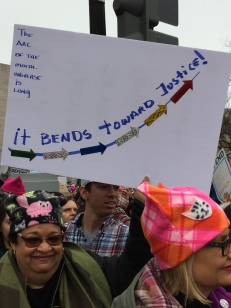
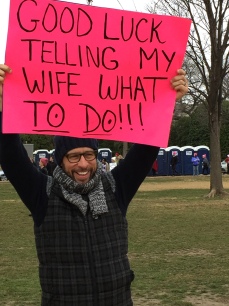
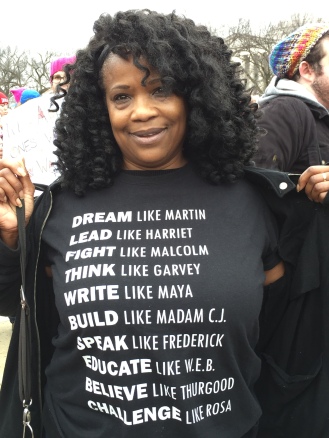
I read their message in their signs – some poignant, some angry, many humorous – but all advocating human rights for all of God’s people.

march-4march-3


What was the point?  The point was to stand together.

march-2

These days it is possible to communicate and cooperate across the globe on-line and through social media. But sometimes we need to get out of our homes – and our comfort zones – and come together.

Sometimes we need to stand shoulder to shoulder, side by side, with one another.

march-5march-6

I came back inspired and energized.

I came back realizing I am not alone in my concern about healthcare, the environment, the LGBT community, immigrants, and people of color.

I came back wanting to help save our planet from thoughtless abuse.

I came back determined to work hard on behalf of those who have no voice or are afraid.

I came back encouraged.

march-7

I won’t give up.

And when I need to, I will march again.

Why I’m marching

I’m a 58-year-old straight white woman with bad feet.  Why am I going to the Women’s March in Washington DC on January 21st?

I’m marching because I want to be part of the conversation. Politicians are always talking. The news cycles are filled with people shouting past each other as they try to force their reality on one another.

There’s a lot of voices out there.

I want to add my voice. My voice will be one of hope, inclusion, and welcome.

I’m marching so I can share what I have learned over 58 years of being a woman, and a pastor, mother, wife, sister, daughter, and an American.

I’m marching my faith.

I want to be involved in what is going on in our country.

I want my voice to be heard. I want to show up, speak up, and share what I believe in.

I want to stand shoulder to shoulder with vast numbers of diverse people across the country and reflect on what it means to love all of my neighbors.

I want to join young and old women of every age, color and ability to declare that every woman deserves to be treated with respect.

I want to march with gay, straight, and trans women and say what is true – each one of us is created in God’s image.

I am not a political activist. I have never done anything like this before.

But I am expending a great deal of time, effort, and resources to ensure that my voice joins thousands of others. Together we will encourage each other to stand up for dignity, equality, and an eager openness to learn about one another.

I am marching a message of love.

I am marching a message of hope.

I am marching a promise never to give up.

I am marching so all people can be included in our nation’s history.

women-march-2

That’s why I’m marching.

I’ll let you know what I experience.

Daring to care

“Do you have a cigarette?” the young woman muttered as I walked out of our local hospital. I didn’t even glance her way.  She persisted, “Can I get a ride into town?” My guard was up; I had just experienced the hurt and disappointment that comes from trusting a practiced liar. That person managed to take money from me and from members of my church before we realized she was simply conning us for whatever she could get.  That incident left me wary.

So who was this person approaching me at 7:15 a.m. on a frigid weekday? When I finally looked closely at her, I saw a young woman just few years older than my children. I was glad to see she was wearing a winter coat, hat, and gloves, but she looked tired. She smelled faintly of alcohol.

“Are you all right?”  I asked.  She rejected my offer of a cup of coffee or a breakfast sandwich, insisting that a cigarette would start her day off right. I drove her the short distance into town. She got her cigarettes and lit one with shaking hands.

“I’m on my way to go grocery shopping,” I informed her.

“I can wait for you,” she said. She seemed lonely and at loose ends, without any plan for the day ahead.

She perched on a chair in the store’s coffee area while I gathered supplies for Christmas cookies.  As she helped me load my groceries into my car, I asked, “Now what? It’s too cold to stay outside.”

When I asked about family or friends, she explained that her boyfriend “wasn’t that nice” and she didn’t think her family would welcome a phone call from her. I put on my best mother voice as I assured her that even when I’m mad at my children, I still want to know they are safe and cared for. She was unconvinced.

“Do you want to go to the homeless shelter?”  I was certain that suggestion would shake her out of her indecision. Instead, she agreed that was the best course.

During the 20 minute drive to the shelter, she kept me amused with her description of growing up in our area, studying at community college, even attending our church’s Fourth of July Jamboree. My heart ached for her as she casually confessed she was an alcoholic with little hope for the future.

The shelter’s in-take clerk was brisk and to the point:

  • Arrest and sex offender lists are checked before entry.
  • No smoking, no drinking
  • Inside hours are 8 PM to 8 AM. After that, everyone needs to be outside.

I realized just how little I was giving her. She had a warm place to sleep that night but had a long, cold day ahead of her. I gave her my name and phone number and encouraged her to call. I described de-tox programs that could help her and counselors who could offer guidance.  I don’t know if I’ll ever hear from her again.

What I wanted, of course, was a happy ending. I wanted to solve her problems and help her find a safer, healthier path. Instead, I was left a lingering sadness and unsettling glimpse of a difficult life.

Will my small gestures help?  Maybe. Maybe we are all pieces of a much bigger puzzle. Maybe someone else will offer her another helping hand. And then another and another. Maybe each one will add up to make a difference.

Just because we cannot solve a problem is not a reason to hesitate to do what we can.

There are needs all around us. One way we share God’s light is by offering our hands and our hearts. Let us do what we can to help one another on the journey.

How does the church work?

As a small-town pastor, I marvel every day about our church – this unlikely collection of volunteers who allow the love of God to shine through them. Our church looks something like this –  When I arrive early on a Sunday morning, the building is empty, locked and dark.  I begin the weekly process of resuscitation by opening the shutters and unlocking the doors. The real vibrancy arrives as people drift in. There’s the guy who makes coffee each week, here are a couple of people who baked cookies and cut up fruit for fellowship time following worship.  The choir, those impossibly busy people who somehow squeeze in weekly rehearsal time, clamber into the choir loft, eagerly anticipating their anthem.

Dedicated parents and grandparents are organizing paper, scissors, and glue sticks, anxious to share Bible lessons and crafts. The sanctuary hums to life as someone flips on the sound system, another carefully places flowers on our communion table, and some friendly volunteers welcome visitors and regulars alike.  The building is brimming with activity now, as neighbors greet one another and weary young mothers grab precious moments with a kindred spirit. Gray-headed seniors lean in for conversation as teenagers casually compare phones and screens.

Before entering the sanctuary, the deacon questions her ability to draw the attention of this noisy, somewhat unruly crowd to the still, small voice of God.  There is Good News to share – God has promised to show up, right here, in our little corner of CT, because we are gathered in God’s name.

Good morning! The deacon asserts boldly.

Good morning!  The congregation booms in reply.

Peace, one might even say the Spirit, descends upon those gathered, not at all distracted by wriggly babies or bored teenagers. Somehow God meets each one of us, exactly where we are this morning. God is in this place and suddenly – we become the church.  We are the people of God, flawed, imperfect, falling very short of the glory of God, yet blessed and renewed by God’s love which welcomes every single one of us. And because God names us the church, the Body of Christ, we can claim that title as well. Together we can endeavor to serve God by sharing God’s love.

That’s church on a Sunday morning.

How does it work on the other days?

  • Someone drops by to donate skeins of yarn she found on sale. Less than an hour later an older woman stops by to ask for prayer shawl materials. She leaves, eager to knit and pray for some yet unknown recipient who will receive a reminder of God’s encircling love. The church works when we share.
  • Two $50 Visa gift cards arrive in the mail. An out-of-state daughter wants to honor her parent’s anniversary by passing along the love and compassion she inherited from their relationship. Later that same day a young woman was weeping in my office, devastated by the husband who abandoned her and their two-year-old child. $50 wasn’t going to solve her problems, but it heartened her to know someone cared. The church works when we celebrate love.
  • One of our snowbirds returned from Florida, bubbling with excitement. “I discovered Tai Chi,” she exclaimed, “and I want to share it with others.” Her enthusiasm draws in 15-18 people, members and visitors to our church, twice weekly as they share fellowship and gentle exercise. The church works when people follow their enthusiasm.
  • “Art makes people feel good,” a gifted woman in our congregation told me. She has the ability to transform paints, fabrics, or flowers into beautiful creations. “More people should be exposed to art,” she declared. Her invitation inspired 20 artists to gather for a show and sale, transforming our fellowship hall into a combination art gallery and cool craft store.  Visitors receive a transfusion of color and creativity on a cold winter morning. Church works when we share our passion and abilities.
  • Meals shared, prayers offered, cards sent, clothes distributed, hugs given, a listening ear offered.

Seminary professors call this “incarnational theology; the Word made flesh.”

I call it making God visible to the world.  That’s church.


*Oil painting by Karen McFarlin:  kmcf3470@gmail.com


After Election Day

Commentators counting down the hours to Election Day make it sound like the doomsday clock is ticking away. One could think the world will end on November 8th.

It won’t.

On November 9th some things will be different. We will have a President-elect.

But – reassuringly – many things will remain the same.

  • The God of yesterday, today, and tomorrow will be with us. God’s faithfulness will continue to endure forever.
  • God’s love, forgiveness, and mercy will still be bigger than any political process.
  • God’s truth abides. This remains true even after centuries of war, famine, poverty, hatred, and evil working to silence voices of hope and compassion. It will be true even after this nasty election season.
  • We will still be welcomed into God’s presence – every single one of us.

The needs of the world – globally and in our back yards – will remain. Jesus said the poor will always be with us. We will need to remember

  • The hungry and the homeless
  • The lonely and the broken-hearted
  • The food insecure
  • Those who are poor in hope or strength, those who need a helping hand or a kind word.

We will still be called to love our neighbors.  All of them.

We will still be called to love our enemies.  All of them.

No matter who wins the election, I pledge to pray for that person.

  • I pray that person will be surrounded by prudent and balanced counsel.
  • I pray that person will have wisdom to accept the vast responsibility of leadership with humility and grace.

No matter who wins on November 8th, many people will be unhappy on November 9th.  I pledge to discover ways to help us listen to one another.

  • We will need to ask one another questions and promise to pay attention to the answers.
  • I hope we can try to imagine what another person’s journey is like.

Deep divisions, mistrust, fear, and anger are with us now. They will remain after November 8th.

But on November 9th – and always – God will be with us, calling us to “bring good news to the oppressed, bind up the brokenhearted, proclaim liberty to the captives, and to comfort all who mourn” (Isaiah 61).

The world won’t disappear, but the world will need our help.  Let’s focus on that.

Good Samaritans I have known

Jesus told us, “Go and do the same” as the Good Samaritan.  Go and

  • Be that caring.
  • Recognize the need right in front of you.
  • Be willing to reach out to someone who is different than you.
  • Break down the barriers and go the extra mile.
  • Dare to speak up.

That’s what it means to love God and our neighbor. How do we do that?

Maybe we can be inspired by Good Samaritans we have encountered in our lives.  Have you met one?  I know I have.

  • The stranger who paid for my coffee in the drive-through lane.
  • The kind lady who allowed me to go ahead of her in line at the grocery store.
  • The thoughtful person who left scones at church for me and my secretary, with a note, “You are appreciated!” It made our day.

There was the family who gave me a ride to a distant city when I was in college. When I missed the bus to my summer job, they brought me to their home, fed me supper, let me stay overnight, and then delivered me to the correct bus in the morning.  I don’t remember their names, but I cherish the memory of their kindness and hospitality.

Good Samaritans are all around us, if we look.  I see them in

  • The volunteers who cook for our community kitchen each week.
  • The man who brings the newspaper in every day for his homebound neighbor.
  • The child who draws a picture to cheer up a sick friend.
  • The knitters who create prayer shawls.
  • The young mother who breastfeeds an abandoned baby in foster care so he’ll have a healthy start on life.

None of those actions change the world.  Neither did the Good Samaritan; he simply helped one wounded stranger by the roadside. But the story of his compassion is being told 2000 years later because he made a difference.

There’s much we can’t do.  That shouldn’t stop us from doing what we can. We need to share kindness. We need to love our neighbor. We need to go past our comfort zone and reach out to others. We need to recognize that stranger as another one of God’s beloved children.

We need to go and do the same.