Sharing Easter Joy

Easter was wonderful! We shouted “alleluia!” and celebrated that “Christ is risen, he is risen indeed!”

 Now what?  How do we make sure that Easter – with all of its hope and joy – is not just a one-day celebration? How do we share the Good News that God offers new life even amidst despair and sadness?

 We are not Bible-thumpers in East Woodstock. No one expects me to pound the pulpit and dictate what they believe or how they live their faith or even that there is only way to find and worship God. Our denomination, the United Church of Christ, is known for welcoming all of God’s people by declaring “no matter who you are or where you are on life’s journey, you are welcome here.”

 So, if we aren’t telling people what they have to believe, how are we sharing the Good News? What I love about my congregation is their creativity. They have discovered many ways to share God’s hope and new life.

Some people knit prayer shawls and offer these gifts as a reminder of God’s encircling love.

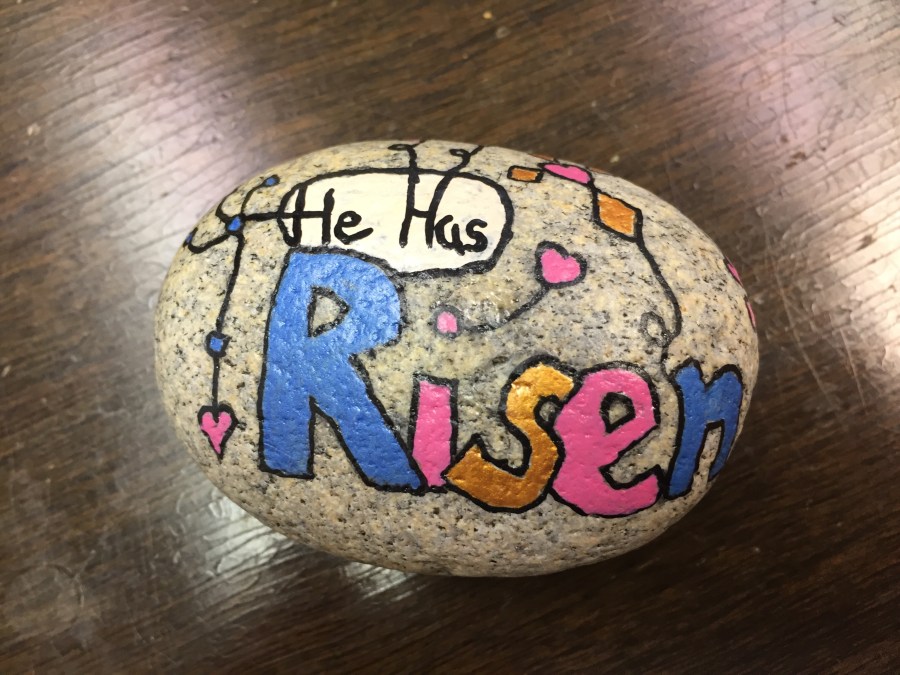
 Some folks paint rocks and place them in parks or other public places or give them as gifts (thanks, Laurie!).  The painter rarely sees the reaction of the recipient, but occasionally powerful stories filter back to us about someone who discovered a message rock and rejoiced in its comfort and hope.  

 Some people write letters to the editor to encourage good stewardship of the earth or combat racism.

 There are the “behind the scenes” folks who sort clothes for the upcoming clothing sale, tidy up the sanctuary in preparation for Sunday, or tend our church garden so it presents a welcoming array of colors to everyone who stops by.

 Some people volunteer at the local community kitchen or spend hours helping out at community closet and food pantry. People send cards, deliver meals, and offer rides to the doctor.

It turns out there are endless ways to share God’s love. It does take intention. It isn’t enough to say, “I’ll just be a good person today.” That’s nice, but the world – and the people who live in it – need more than just “nice.”

I read recently that Benjamin Franklin began each day asking, “What good can I do today?” and concluded the day by wondering, “What good did I do today?” What stranger did we greet with kindness, what comfort did we offer to those in despair, how did we treat our neighbor? With our different gifts and varying interests, we can choose to offer hope and spread encouragement.

And the hope of Easter will live on.

Puerto Rico – my experience

My first impression as we approached San Juan for a week-long mission trip with its brightly-lit skyline and bustling airport was, “Maybe they don’t need us after all.” But, as is often the case, the first impression didn’t tell the whole story. Beneath the glittering exterior, signs of damage and lingering pain were everywhere. Once our group started looking even slightly under the surface, we witnessed the devastating impact of Maria, the Category 5 hurricane that enveloped the island in 2017.

We saw the lovely sandy beach dotted with cabanas in tatters. The lighthouse overlooking the bay welcomed visitors but barred entry to the roof and second floor because of extensive rain and wind damage. The homes we visited were occupied but covered with thick layers of mud and mold. The long driveway leading to the church camp where we stayed was lined with electrical wires and fallen trees; the camp itself was still powered by generator. The enormous welcome sign at the camp’s entry was standing but was illegible because so many letters had been blown off by high winds. The impact of the storm was everywhere.

When we visited the beautiful national forest, we enjoyed panoramic views of the lush rain forest. Eighteen months after the storm, the visitor center remains closed and the majority of walking trails are impassible. It made me hope that this national treasure is on some government “to-do” list somewhere.

Our first work day was spent power washing the flat roofs of homes. The volunteer coordinators in northeastern Puerto Rico are valiantly working through a list that still contains over 200 people who are patiently waiting for much-needed help. Our plans to coat the roofs with sealer and paint were foiled by near-constant rain, so we turned our attention instead to the church camp.

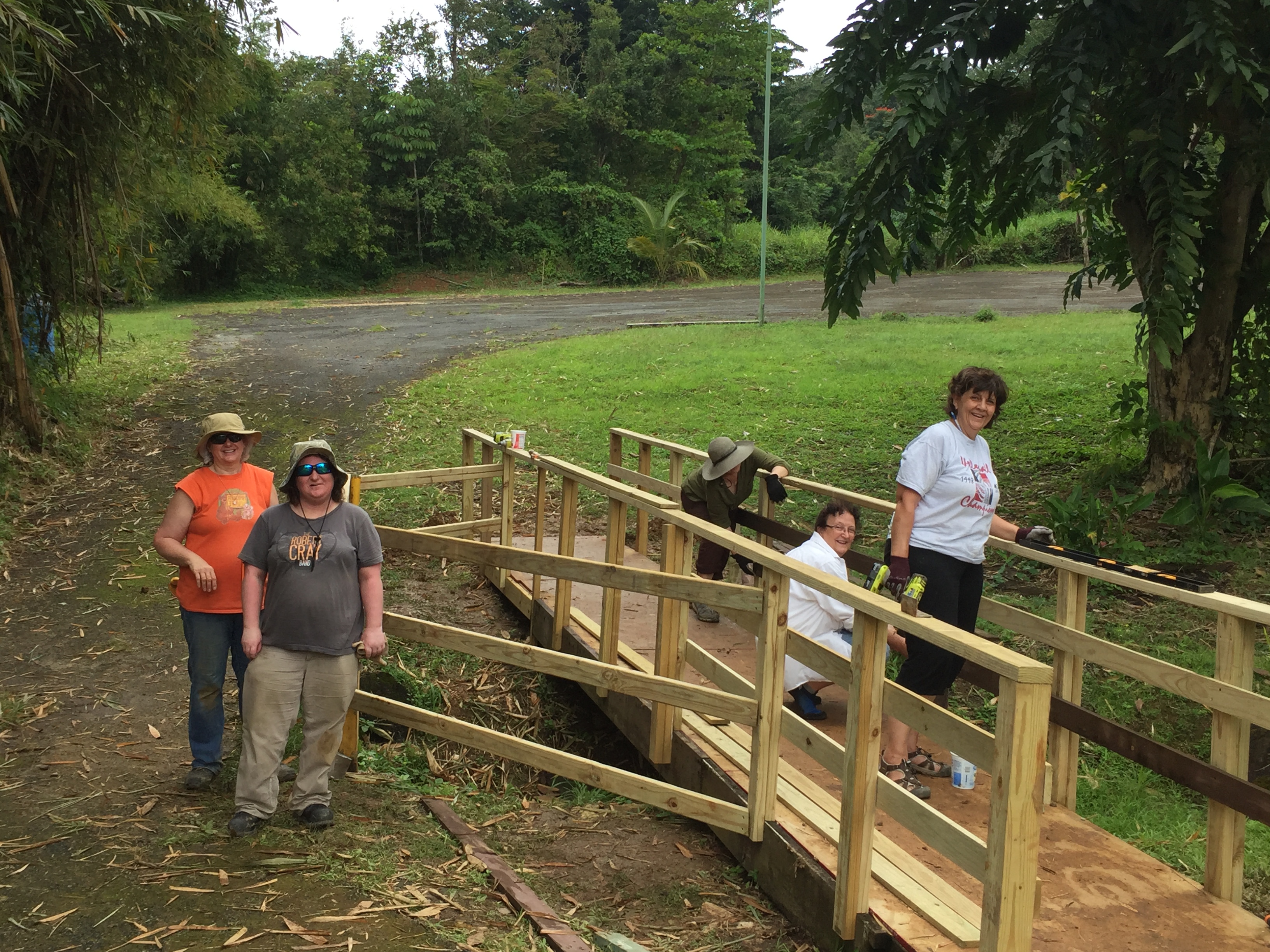
Fortunately many members of our 15-person group had more abundant carpentry and construction skills than I do. We divided into smaller teams to address the needs of the camp – a foot bridge that had been swept away by the rains, a pavilion roof crushed by a fallen coconut tree, and an outdoor chapel with an unsafe walkway and railings. I discovered that every good work crew can use a willing “go-fer” and someone who can fetch tools, jot down measurements, provide a bit of muscle, and offer much-needed water in the steamy climate.

We worked hard in our short time there and accomplished a lot. And yet… there is so much left to do.  We were reminded that we were just one small piece in a much larger effort.  We carried on work that was started before us; after us another group will push it forward.

It seems to me that so much of faith is like this – we may not see the end result of our efforts, but we trust that God is at work in ways that we cannot always understand. Let us lift up prayers for the people of Puerto Rico and for people across the globe who struggle against odds larger than themselves. Let us follow John Wesley’s encouragement to “do all the good you can, by all the means you can, in all the ways you can, in all the places you can, at all the times you can, to all the people you can, as long as ever you can.”

Gary O: Voice of Putnam

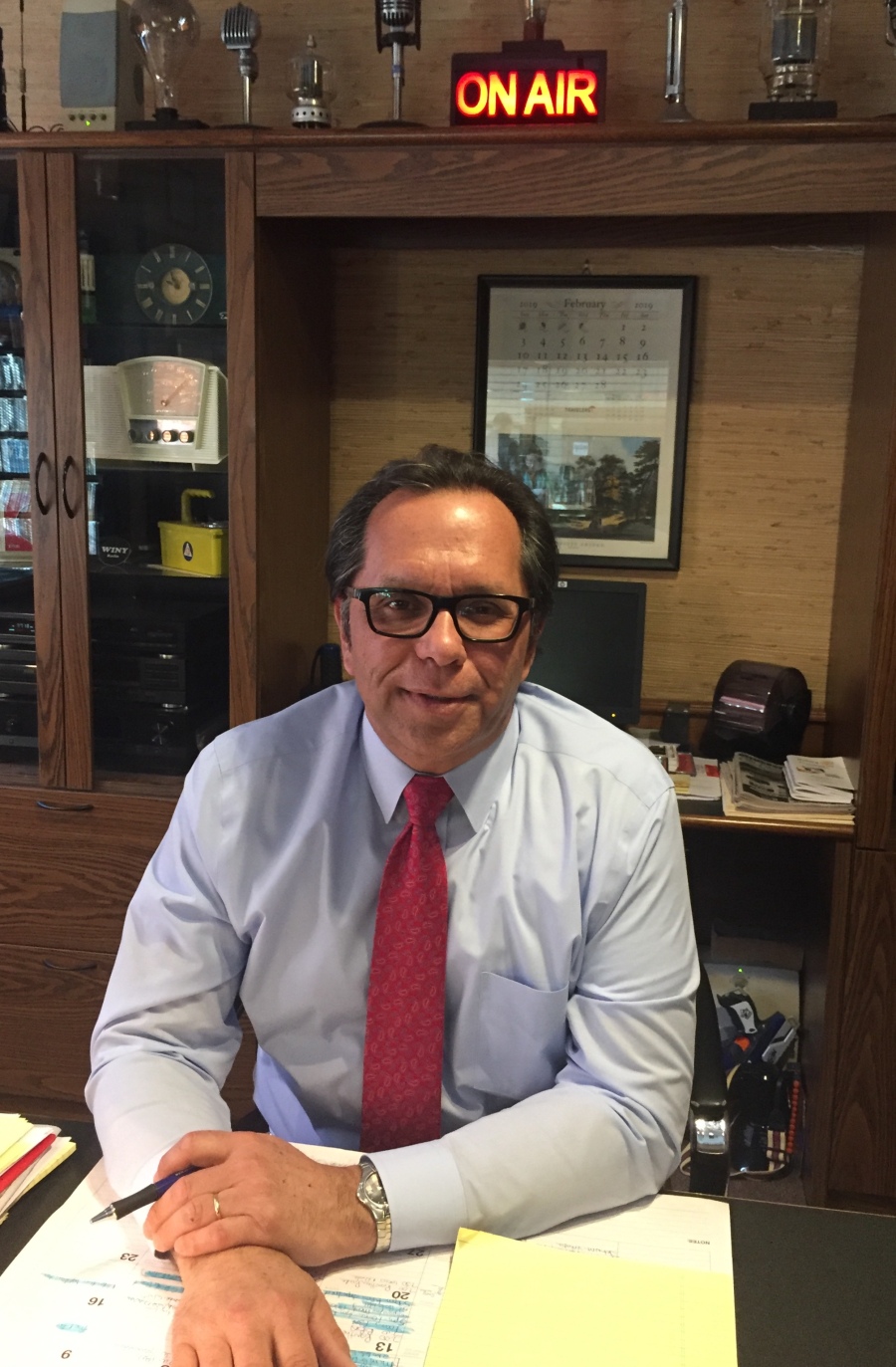
            If you want to meet someone who loves their job, talk with Gary Osbrey. “Gary O,” as he has been known since high school, is co-owner (with his wife Karen) of WINY, the radio station in the heart of Putnam. On the morning I spoke with him, Gary was brimming with excitement. “I just flipped the switch,” he said excitedly, “We’re now broadcasting on FM as well!”  It was fabulous news for this hard working disc jockey who had always dreamed of owning a radio station.

            The pieces of Gary’s life seemed to have come together to lead him to this time and place. Growing up in Coventry RI meant that he was able to attend the only high school in the state with a student-run radio station. Getting a job at WINY (which he imagined would be a short-term experience) introduced him to the attractive station secretary, Karen. They married in 1987. All along, his goal was to own a radio station before he turned forty. On May 31, 2001, just months before that milestone birthday, that dream became a reality.

When Gary reflects on the path that led him here, he shakes his head in wonder at what he describes as the blessings of his life. 

            “I never have to hit the snooze button,” Gary confided, “I’m always glad to come to work.” He’s at his desk by 5:15 a.m. every morning, ready to greet early-morning listeners with a full range of news, sports, and updates on local events. The purpose of a local radio station, Gary says, is to provide news and information and to promote and celebrate the community.

Gary accomplishes that with his enthusiasm and welcoming spirit. His morning talk show is always booked with people eager to share their news. On any given morning, a listener can tune in to high school students describing sports, music, and arts, representatives from the hospital talking about health campaigns, religious communities sharing upcoming events, or politicians outlining legislation that will impact northeastern Connecticut. Life moves at a breathtaking pace as WINY fosters a sense of community in the Quiet Corner.

Gary’s influence and enthusiasm doesn’t stop at his office door. He is a visionary who can help others imagine the possibilities of new ideas. Not everyone who visits Disney World immediately thinks of Putnam CT, but Gary did. Disney’s Light Parade inspired Gary to introduce the idea of the Dazzle Light Parade to his small town. Now seemingly an institution in Putnam on the weekend following Thanksgiving, the idea was initially met with skepticism. Who would want a parade in chilly November? Gary’s perseverance led to the first parade in 2002, when 65 groups and organizations lit up the streets as they walked by appreciative crowds. In 2018 there were 145 entries in what is now a cherished holiday tradition.

That same ability to envision something new led to Gary’s suggestion of the Putnam River Fires. Some folks might have been discouraged when that idea was tabled year after year by town leaders. Not Gary. Finally, as part of Putnam’s 150th anniversary in 2005, the first River Fire glowed on the Quinebaug and drew crowds to the river for music and entertainment. Another beloved tradition was born.

When someone tries to compliment Gary on his accomplishments, he brushes that off saying, “You think I’m busy?  You ought to see my wife!” And it’s true – Karen is involved in multiple community organizations and events, determined to improve the lives of people in Putnam and the surrounding area. Among her many responsibilities, she is the president of the Putnam Arts Council, a member of the Quinebaug Valley Community College Foundation, and president of the Putnam Building Committee which will oversee the construction of the new town hall and library.

This hard-working, dedicated couple recognizes the need to also take care of themselves. Sunday evening dinners are a priority as they carve out time in their busy schedules to reconnect and plan for the upcoming week. An annual “winter hibernation” getaway weekend provides much-needed down time as they unplug and unwind. They seem to realize that the only way they can keep doing the work they love is if they take care of themselves and each other.

“All I want is to live a purposeful life,” Gary explains. This includes quieter activities that also offer a profound impact. Look for him at 7:00 a.m. on Saturday mornings at the Main Street Grill for Bible study and reflection. This group, which is open to anyone who wants to show up, asks the question, “Where have you seen and experienced God this week?” Together they marvel at how God’s love and guidance weaves in and through their lives.

Through his faith, hard work, and dedication, Gary Osbrey enriches the lives of people in northeastern Connecticut.

You can listen to WINY at 1350 AM and 97.1 FM.

What does the church do?

“What does your church do, anyway?” It wasn’t a snide comment or a rude question, but an honest inquiry from someone who isn’t involved in a faith community and can’t really see any particular reason to bother.

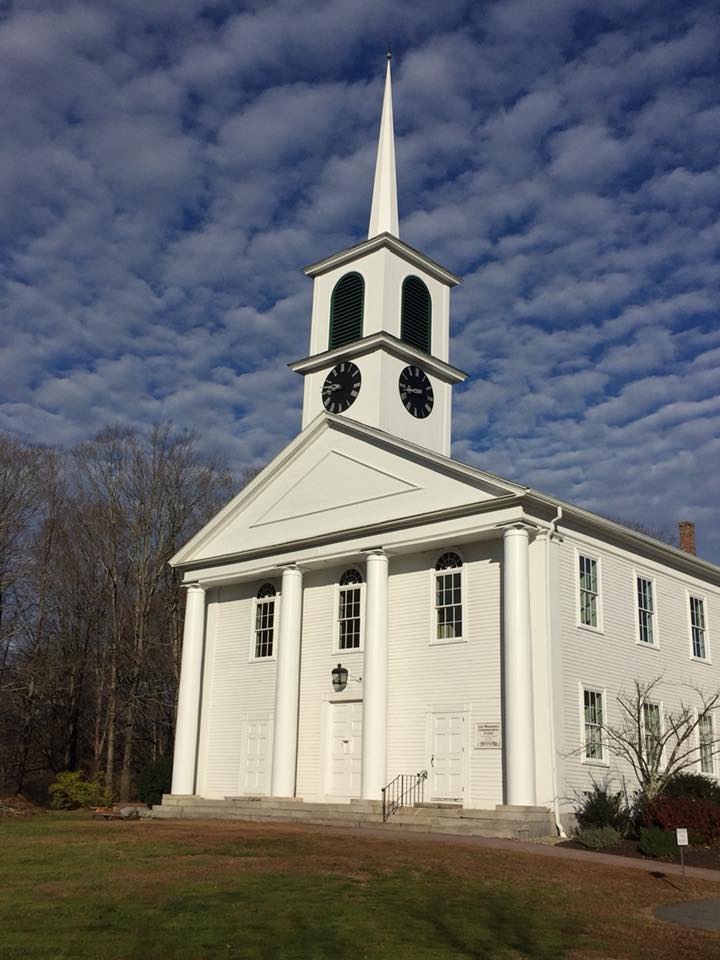
It did make me think.  Especially since this coming Sunday we will be holding our annual congregational meeting, a time when we review not just logistical questions about budget and building upkeep, but take some moments to ponder – what did our congregation do this past year? What have we accomplished? What difference have we made?  Because really – if we can’t answer those questions, then what are we all about?

I tried to frame my answer in a way this person would appreciate. But where to start? Should I describe our showcase event, our Fourth of July Jamboree when hundreds of people gather on our common for music, fellowship, and old-fashioned fun? Or should I describe more serious efforts like supplying food, clothing, toiletries, and gift cards to the homeless and domestic violence shelters as well as to local families.

Should I talk about our public ministries like weekly worship that offers inspiration and fellowship or is our behind-the-scenes work more important? How do we measure the importance of visiting the sick, praying with and for the dying, and offering comfort to the lonely and mourning?

What is it that we do?  Is anyone grading us or keeping track of our actions? If they are, would they like to know about the school backpacks that are filled and delivered in September or presents that are carefully chosen and wrapped at Christmas time or perhaps the Easter baskets that overflow with bounty and compassion? Or would they be more interested in meals and cards delivered to the homebound or the efforts of our children and youth as they rake leaves and help with home repairs.

During the season of Epiphany we are encouraged to take our Christmas gift – the love and compassion of God – and share it with everyone we meet. Don’t, Jesus instructs us, hide your light but let it shine so that God’s glory and love may be experienced and felt. That’s our job. That’s what we are meant to be about.

Do we do it perfectly? No. There is always more to do and there are endless needs that go unmet. But we try to live out God’s commandment to love our neighbor. We endeavor to make a difference in our neighborhood and across the globe.

Perhaps our primary call – the purpose of the church – is to make God’s love visible and to remind people that God is near. “Emmanuel” isn’t just a pretty word for Advent. It means “God with us” and that means in the nitty-gritty of our everyday lives. The church – each one of us – is called to echo the joy of the angels who said, “Behold!” Behold – God is with us. Our actions should reflect that good news every day.

The Face of America

The American women’s gymnastics team won first place in the World Gymnastics championships last week in Qatar. These fabulous young women vaulted, tumbled, leaped, and braved death-defying moves to outshine competitors from across the globe. While I often feel like I should raise my arms in victory any Sunday I manage the three steps up to the pulpit without tripping – yes! She stuck the landing! – they perform gravity-defying moves daily.  And they smile while doing it.

Their faces are captivating

When I watch this group of accomplished, determined, strong young women, I feel a sense of hope.

Their gymnastic ability is unparalleled.

They are world champions.

And they are the face of America.

Gymnastics 5

This team with skin tones of varying hues, with a variety of racial and ethnic backgrounds – this is America. The true face of America is a collection of people from a wide variety of backgrounds who come together for a common cause. Our country has never been “white”. When the first immigrants arrived on these shores, they discovered native people who did not look like them.  And that was the beginning – for better or worse – of a new America.  Perhaps America was once racially pure – but that was long before European settlers came to this land.

Our country has a complicated history with race – the displacement and slaughter of Native inhabitants, the brutality and horror of slavery, Jim Crow laws, and the ongoing racism against people of color. Our country continues to struggle with race.

But our gymnastics team demonstrates what is possible. They remind us that people from different backgrounds can work together to make a difference. They set an example of building bridges, of being united, and of finding (or creating) common ground.

Most of us will never cartwheel on a balance beam or fly between uneven bars. But all of us can be inspired by the determination and hard work of this young team and vow to represent our country with the same grace and unity.

Church of opposites

Can we agree that we live in troubling times? It’s hard to watch the news when we hear about

  • Bombs in the mail, spreading anger, fear, and threats.
  • Increasingly powerful storms causing widespread destruction and suffering.
  • Thousands of refugees seeking safety, food, and a better future for their children.
  • The pre-Election Day noise when candidates seem to thrive on mocking one another.
  • Rude interactions when people find it difficult to be patient, take time to listen, or pass along simple courtesies.
  • A growing opioid epidemic that is ruining the lives of too many people.

I don’t have an “app” for that.

But I do have a solution that gives me hope. The church. In this day and age of declining church attendance, waning interest in organized religion, and disdain for the damage done by too many church leaders, the church still has Good News of hope, forgiveness, and new life. I celebrate the difference the church can make in a sad and hurting world.

I would like to introduce you to the “church of opposites”. The world does not get the final word on what is true – God does. The church is called to proclaim that truth, which is often opposite of what the world seems to believe.

Just imagine what this “church of opposites” gets to say:

  • Instead of division, we offer unity.
  • Instead of indifference, we offer compassion.
  • Instead of anger, we offer peace.
  • Instead of isolation, we offer community and fellowship.
  • Instead of exclusion, we celebrate God’s welcome.
  • Where there is darkness, we will lift up God’s light.
  • When everyone just seems exhausted, tired of mindlessly rushing forward – let us offer Sabbath rest. Let us breathe in the goodness of God.
  • When people are tempted to fly off the handle, we can take a breath. Perhaps say a prayer, but at least take a moment to remember we are not alone.
  • Instead of ignoring or drowning out voices of pain, let us listen to the forgotten and lonely.
  • In times of despair, let us speak of God’s hope and God’s refusal to ever (ever!) give up on us.

This is the church of “opposites.” We are a vital voice in today’s noisy, angry world. We are called to offer God’s healing love and a welcome that values all of God’s people.

Sometimes people consider “church” to be a quaint, outdated notion that no longer matters. But I consider the church, filled with the power of God’s Holy Spirit, to be a force of powerful change and everlasting hope. Strength, courage, love, and compassion – those are “opposites” we need today.

Carefully choosing our mentors

Who is someone you admire? Who is someone you have learned from? Our congregation enjoys a mentorship program with the 9th and 10th graders in our confirmation class. Adults meet monthly with the teens to wrestle with the concept of living a faithful life in a sometimes chaotic world. They talk about Scripture, current events, and the joys and challenges of listening for God’s voice. These different generations listen and learn from one another.

I was blessed with a wonderful mentor as I prepared for ministry. The Rev. Dr. Bruce Bunker was the pastor of the First Congregational Church in Wallingford CT. When I was a young seminarian, he recommended thought-provoking books and essays and made time to listen to my questions and doubts. He welcomed me to the pulpit of our large downtown church so I could offer my first faltering attempts at preaching and then would diplomatically review the results. He arranged for speech lessons so my high-pitched, nervous squeak could evolve into a lower range that could convey authority and confidence. In an age when women clergy were still relatively rare, he encouraged me to pursue a solo pastorate. He believed in my call to ministry and that helped me believe it, too. His encouragement and faith in me was life-changing. His ministry was an inspiration to my own and I am forever grateful.

I wish everyone could have a mentor like that. Sadly, these days there are few public leaders I would wish to emulate or that I would recommend as a role model. If we believed the mocking tones of so many politicians, one might be tempted to believe that it is acceptable to callously ignore the feelings and worth of others.

This is a time to choose our mentors carefully. The loudest or most powerful person may not be the wisest choice. Dangerous, uncaring messages and hate-filled rhetoric fill the news. We are being asked to believe that callous indifference is the “new normal.” We may be tempted to think that our small efforts can have no impact on the growing tide of anger and division. But that is not true.

Instead, look for the behind-the-scenes workers – the ones who are feeding the hungry, visiting the lonely, and caring about the forgotten. Notice the people whose smile or kind words lift someone’s spirit. Those mentors are all around us – people making a difference despite the increasing odds against them. Look for those who faithfully live lives of compassion – not for recognition or glory, but because they feel called to care for God’s people.

Many people in positions that were traditionally revered as positive role models simply do not deserve that title. Let us not be discouraged by the multiple examples of indifference. Instead, let us be inspired by those who are acting in life-giving, hope-providing, difference-making ways. Let us choose our mentors wisely and be courageous enough to pass on a legacy of caring.

Time for compassion

Just for a moment, let’s leave politics out of it.  It’s been a long, trying, emotional couple of weeks as we have testimony from Dr. Blasey Ford and Judge Kavanaugh.

I believe Dr. Blasey Ford, but even if you don’t, it is time to look at the women and girls around us with compassion.  Saint Paul talks about putting on an “armor of faith” (Ephesians 6). He describes it as including a breastplate of righteousness, a helmet of salvation and a sword of the Spirit.

Right now I would settle for a heart of compassion and a gentle hand of mercy. It’s time to put our armor down and instead experience vulnerability of listening to one another. Let’s stop drawing battle lines based on which testimony we believe. Instead, take a moment to recognize the millions of women and girls who are suffering flashbacks to their moments of powerlessness, their experiences with violence, and their journeys into shame and degradation. Forget about arming ourselves for further arguments and division. Let’s hear those who are saying #metoo.

I have heard from many women who were either unable to listen to Dr. Blasey Ford’s description of attempted rape because of the painful memories it recalled or who found themselves riveted as they heard someone else describe the terror they thought only they knew about.

You can discount Dr. Blasey Ford’s words if you wish. But you can’t ignore the legions of women who have experienced violence and who remained silent because of fear or humiliation.

If someone has a story to tell, the greatest gift you can offer is simply to listen. You don’t need to have answers or wisdom. You probably don’t need to say anything except, “I hear you. I believe you. I’m sorry you experienced that.”

In the compassionate version of the world I yearn for, we offer one another solidarity, a listening ear, and a tender heart.  We assure women and girls who have not been heard or believed that we are now listening. And we remind them that they are beloved children of God – strong, valuable, lovable, and deserving of dignity.

That’s the world I want to live in.  We create that world every time one of us opens our hearts to compassion and caring.

You have 30 seconds

A car horn blared behind me, seeming to make my whole car shake and causing me to clench the steering wheel even tighter. The large black truck had been following me very closely for the last mile; only our narrow, windy country roads prevented him from passing me. Now that we had reached an intersection, he was clearly fed up with my speed-limit driving. He wanted me out of his way – fast. The fact that two cars were approaching, making it impossible for me to cross the busy street made no difference to him. He expressed his frustration with his loud horn as he rolled down and shouted words I won’t repeat.

When it was safe, I drove across the street, still shaken by the anger that followed me. There on the other side of the intersection, sitting in his truck, was a young man from our congregation.  He also rolled down the window. His interaction with me was entirely different. He gave me a big smile and leaned out to wave his hand. We didn’t speak, but my spirits were lifted by his cheery greeting and obvious goodwill.

Each encounter lasted no more than 30 seconds but the impact was powerful. It helped me realize what a difference our words and actions can have. Never underestimate your ability to influence the mood or even the entire day of another human being. Every day – and several times in each day – we have a choice of how we will live, speak, and interact with one another. Whether the person we encounter is a stranger or friend, we have a choice about what impression we will make and how we will leave that person after we part. Will that person be better off, lifted up, or encouraged? Or will our words and actions leave that person hurt, angry, or afraid? The choice is ours.

In the story of the Exodus, Moses tells the people of Israel that they are responsible for their actions. Moses describes the choice that they have; “See, I set before you today life and prosperity, death and destruction.  For I command you today to love the Lord your God, to walk in obedience to him, and to keep his commands, decrees and laws… I have set before you life and death, blessings and curses. Now choose life…” (Deuteronomy 30).

Choose life. Choose kindness, every time. Choose civility, choose respect, choose patience. Choose to treat the other person as you would wish to be treated. Don’t overlook those 30 second encounters. They might make all the difference.

You have 30 seconds to make a difference – now go out and share God’s love.

Faithful, not successful

“Cure the sick, raise the dead, cleanse the lepers…”  Matthew 10:8

Jesus gave these instructions to the disciples before he died. He tells them to carry on his ministry by sharing God’s life-changing love. Jesus instructs his followers to offer healing and hope wherever they go.

There is plenty of need. We don’t have to look far to see the pain of this world, filled with brokenness, addiction, division, and loss. Now it’s our turn to be those disciples and put our faith into action. We might be inspired to support refugees, fight food insecurity, or address racism and inequality. We might feel called to love our neighbor in big and small ways.

But then – hesitation sets in. Why bother? Two thousand years after Jesus told his disciples to live their faith, the world is still a mess. For anyone who enjoys problem-solving and the satisfaction of getting things done, this is a discouraging track record. Sometimes it seems there is a distinct lack of tangible results.

But maybe we are expecting more of ourselves than God does. God demands faithfulness, not success.  Not being able to solve a problem or eliminate a challenge does not give us permission to ignore it. We are called to do what we can, help when we are able, and trust that God is at work.

Living faithfully is a marathon. It is the work of a lifetime where results are not always obvious. Sometimes the smallest actions can make a difference. Author Joyce Rupp wisely said, “People gain so much hope when they know they are not experiencing something alone.” It may be impossible to eliminate someone’s pain or transform their circumstances. But faithfulness tells us to show up, acknowledge the need, listen to someone’s story, accompany them in their pain, and offer a meal or a coat or a helping hand or a listening ear.

This quote hangs by my desk and inspires me every day:

Do not be daunted by the enormity of the world’s grief.

Do justly now.

Love mercy now.

Walk humbly now.

You are not obligated to complete the work but neither are you free to abandon it.

Let’s recognize the great need that is all around us and respond with God’s love and care. We can respond with faith and leave the success up to God.