Virus and Bias

When things go wrong – and let’s face it, things have gone really wrong lately – our first impulse is to find the cause. We would like a logical explanation followed by an outline on how to fix it and make it better.

            Unfortunately, bad things happen to good (and not-so-good) people all the time. Frustratingly, there isn’t always a clear reason. One of my new favorite books is called Everything Happens for a Reason (and other lies I’ve loved) by Kate Bowler. When she was diagnosed with Stage 4 cancer at the age of 35, her personal suffering led her to explore the notion that all of life’s challenges are somehow a test of character. Her conclusion? There is no logical pattern – sometimes bad things just happen.

            That brings us to today. We are all being affected by events beyond our control. It is scary and unnerving. The coronavirus is changing life as we know it. There will be a solution and a cure someday but not before thousands of people have died. None of us have experienced a pandemic like this before.

            Fear of the unknown and the yearning to identify a “reason” for our distress can lead people down the path of racism and finger-pointing. My cousin adopted two toddlers from China; these lovely young women are now in their early twenties. Both of them have reported a disturbing increase in hurtful and racist comments. One described driving to a convenience store to pick up milk when a stranger threw pebbles at her car and told her to “go back where she came from.” She skipped her errands and went home that day. But sometimes they need to go out and too often they are met by people who roll their eyes or make an exaggeratedly wide berth around them. Others are more direct: “Go back to Wuhan!” or “Aren’t you glad your people brought this disease here!”

            Angry and frightened people say thoughtless and foolish things. Now is time to speak up. This is not the “Chinese flu.” This is a virus with a scientific name – Covid-19. It doesn’t have a nationality. It is no one’s “fault.” It is an equal-opportunity disease searching for a host – humans – across the globe. To state the obvious – people of Chinese descent are not more likely to carry the illness or pass it on.

Instead of fighting one another, let’s work together to make an overwhelming situation more bearable. We can correct misconceptions that seek to blame one group and speak for those who are targeted by ignorance. Let’s recognize that people of every race, age, and culture will be affected by this crisis. We need to support and help one another in order to survive. People across the globe will always be stronger when we look past our differences and recognize our shared humanity. Together we will get through this so we can look forward to better days ahead.

Corona and Self-Care

It’s been a long week, hasn’t it?  It seems hard to believe that just seven days ago, I was agonizing over the decision about whether to hold worship in our sanctuary. Now the idea of groups coming together is horrifying. As a result, online gatherings are springing up everywhere. Classes, youth groups, Bible study, yoga, “zoom”ba (love the name – exercise via Zoom meeting!). Even online pottery classes and art lessons. We are discovering a whole new way of connecting with each other.

            But it is a steep learning curve for many of us. Throughout the week, I found myself shaking my head and muttering, “They didn’t teach me this in seminary.” Of course, when I first arrived at the East Woodstock Congregational Church in 1987, the church still had a mimeograph machine, a rotary dial telephone, and was proud of its up-to-date electric typewriter. Fast forward to 2020 when I spent this week learning how to hold online meetings and discovered the advantages of establishing the church’s own YouTube channel. Whew.

            Whether your routine has been disrupted by working at home, homeschooling your children, adjusting to extended periods of alone time, missing loved ones in hospitals and nursing homes, yearning for social interaction, or being deprived of opportunities to shop, eat, and gather together – this has been a big adjustment.

It’s time to take care of ourselves.

Being tough and determined is fine, but it is also all right to also acknowledge that this isn’t easy. It is hard to completely change our way of life in a matter of days.

Now it’s time to think about what would feed your spirit, what will calm your anxiety, and what will help you get through one more day at a time. Maybe the first thing is to turn off the news and step away from the computer for a while.

 We can listen to the wisdom that mothers and grandmothers have been offering for generations – get some fresh air, exercise, eat healthy meals, get enough sleep, and drink plenty of water. Be gentle with yourself. None of us have done this before. We don’t have to be good at this right away. Very few of us are natural isolationists.

 Find words of Scripture, poetry, or music that comfort your heart. Search for hope and encouragement. And then share that with others – in the midst of our own challenges, we need to remember those who were already struggling before all of this started.

And through it all, God will be with us.

Rejoice in the Lord always. I will say it again: Rejoice! Let your gentleness be evident to all. The Lord is near.Do not be anxious about anything, but in every situation, by prayer and petition, with thanksgiving, present your requests to God.  And the peace of God, which transcends all understanding, will guard your hearts and your minds in Christ Jesus.  (Philippians 4: 4-7)

Virtual Church

Earlier this week my science professor brother called to urge me to cancel worship because of the coronavirus threat. I wasn’t ready to make that decision yet. “So many people look forward to Sunday morning,” I protested. “Shouldn’t we offer people the opportunity to hear some Good News amidst all the doom and gloom? And besides, for some folks, this is their one opportunity to get out of the house, be with others, and enjoy some fellowship. And we’ve got a great group of kids who love Sunday School!”

Later in the week the leadership of the Southern New England Conference recommended that all churches in the United Church of Christ close their doors for two weeks. I still hesitated. “But what about the wonderful anthem our three choirs have been rehearsing? How about the nine new members we are planning to welcome? And the youth group’s potato bar fundraiser?” We’re a busy church – so many events were scheduled for Sunday. How could we change that?

I dragged my heels and was very resistant to the idea of not meeting on Sunday. As I reflected on my reluctance, I realized what is true about me – I love worship. I love when our sanctuary comes alive with people of all ages. I love squirmy children and gurgling babies. I love the joyous energy of conversation and laughter that fills the air before worship. I love sharing joys and concerns and I love that this diverse group of people comes together to be a family to care about one another. I love lifting up our voices together to praise God. I love the quietness of gathering together in prayer.  

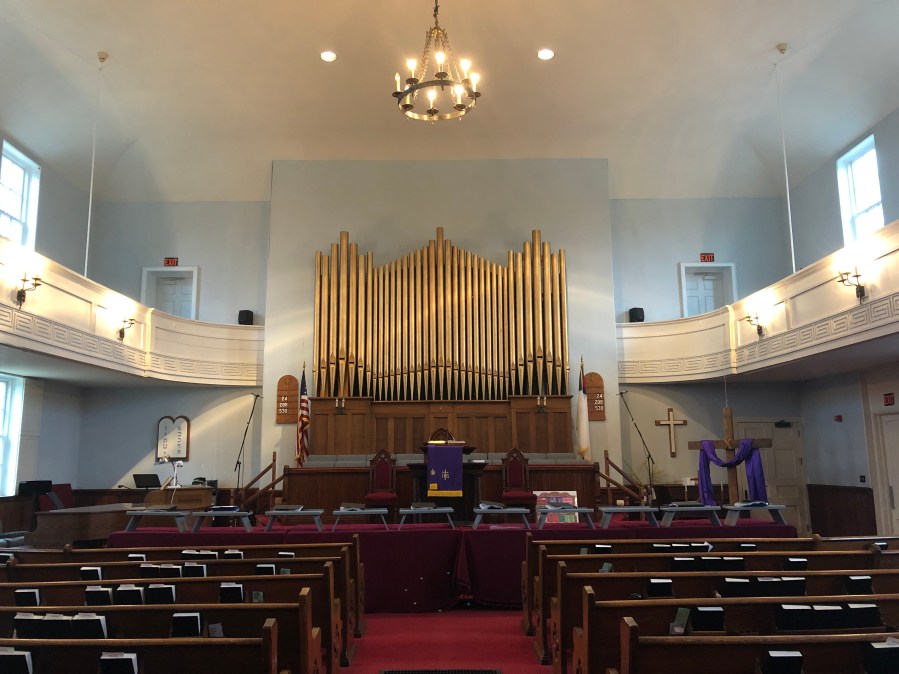
The sanctuary is a building. The people are the church. I love being the church with them. How could we not come together?  

And yet. We have an obligation to keep everyone safe. We don’t want people to come to worship who should stay home. We don’t want to expose anyone to infection. We don’t want to spread this virus.

We will worship online this Sunday. Our service will be recorded live on Facebook. People can watch our worship on our Facebook page. Our sanctuary will be empty but many of us will still be together in spirit. It is not the same but I give thanks for this technology.

God is good. God, Creator of all we see, will lead us through these new circumstances. We will discover new ways to be the church and new ways to share God’s love. We will continue to celebrate God’s hope and enduring presence.

This is a new era for all of us. None of us have ever lived through a pandemic before. But take heart – “God is our refuge and strength, a very present help in times of trouble” (Psalm 46). And that is true no matter where we are.

Corona and Community

The world seems to be divided into two distinct groups – huggers and non-huggers. Some people announce their preference during introductions.  “I’m a hugger,” a new acquaintance informed me. “Do you mind? It’s so good to meet you.” At the other end of the spectrum are folks like my uncle (a confirmed non-hugger) who insists that a “hearty handshake” is sufficient to convey good wishes and affection.

Nowadays, neither form of expression is acceptable or encouraged.

The Coronavirus has reestablished societal rules that would warm a Puritan’s heart.

“No touching” is the recommendation of the Center for Disease Control.

“Stand at least three feet apart,” advise many doctors.

“Don’t get too friendly,” seems to be the general advice.

            A large part of gathering together as the people of God is the act of caring for one another. Whether we assemble for worship or fellowship or a shared meal, there are always extended periods of hugs, handshakes, and hearty pats on the back. The warm, caring congregation I serve often expresses their concern and compassion with these personal, physical forms of affection. They are treasured by the vast majority of our congregation and particularly by those who live alone or are mourning or lonely or seeking the warmth and reassurance of human touch.

            So we enter a new era – hopefully a temporary one – where we must discover new ways to greet and honor one another. We decided against eliminating our post-worship receiving line where huggers and non-huggers greet me and engage in conversation. Those encounters are priceless. Ministry is, at its heart, all about relationships and the bond we share. In those precious moments I can ask about someone’s health, check in about children or parents, or hear a brief recap of a trip. Now we need to learn to do that without physical contact.

            We are experimenting with creative alternatives. Some people offer a “Namaste” with prayer hands in front of their chests while others fold their fingers into a heart shape to express their affection. Some people have tried tapping feet but many of our older folks envision themselves toppling over and opt to keep their feet firmly planted on the floor. The Vulcan hand signal, arms crossed over the chest in a symbol of an ancient cross, and simply bowing to one another are all options.

            We are dipping our toes into the beauty of American Sign Language. Last Sunday a teacher of the Deaf taught us the symbol for “peace be with you.” Dabbling with a new language reminds us that God speaks in many ways. As we learn new expressions, perhaps we will become more attuned to the nuances and needs of others.

            None of us asked for this era of fear and concern that the Coronavirus has thrust upon us. But God is good. There are many ways to be in community with one another. Whether online or in person, whether in close contact or maintaining “social distancing,” we can honor the most important elements of community – listening, loving, caring, and accompanying one another on the journey.