Corona and Community

The world seems to be divided into two distinct groups – huggers and non-huggers. Some people announce their preference during introductions.  “I’m a hugger,” a new acquaintance informed me. “Do you mind? It’s so good to meet you.” At the other end of the spectrum are folks like my uncle (a confirmed non-hugger) who insists that a “hearty handshake” is sufficient to convey good wishes and affection.

Nowadays, neither form of expression is acceptable or encouraged.

The Coronavirus has reestablished societal rules that would warm a Puritan’s heart.

“No touching” is the recommendation of the Center for Disease Control.

“Stand at least three feet apart,” advise many doctors.

“Don’t get too friendly,” seems to be the general advice.

            A large part of gathering together as the people of God is the act of caring for one another. Whether we assemble for worship or fellowship or a shared meal, there are always extended periods of hugs, handshakes, and hearty pats on the back. The warm, caring congregation I serve often expresses their concern and compassion with these personal, physical forms of affection. They are treasured by the vast majority of our congregation and particularly by those who live alone or are mourning or lonely or seeking the warmth and reassurance of human touch.

            So we enter a new era – hopefully a temporary one – where we must discover new ways to greet and honor one another. We decided against eliminating our post-worship receiving line where huggers and non-huggers greet me and engage in conversation. Those encounters are priceless. Ministry is, at its heart, all about relationships and the bond we share. In those precious moments I can ask about someone’s health, check in about children or parents, or hear a brief recap of a trip. Now we need to learn to do that without physical contact.

            We are experimenting with creative alternatives. Some people offer a “Namaste” with prayer hands in front of their chests while others fold their fingers into a heart shape to express their affection. Some people have tried tapping feet but many of our older folks envision themselves toppling over and opt to keep their feet firmly planted on the floor. The Vulcan hand signal, arms crossed over the chest in a symbol of an ancient cross, and simply bowing to one another are all options.

            We are dipping our toes into the beauty of American Sign Language. Last Sunday a teacher of the Deaf taught us the symbol for “peace be with you.” Dabbling with a new language reminds us that God speaks in many ways. As we learn new expressions, perhaps we will become more attuned to the nuances and needs of others.

            None of us asked for this era of fear and concern that the Coronavirus has thrust upon us. But God is good. There are many ways to be in community with one another. Whether online or in person, whether in close contact or maintaining “social distancing,” we can honor the most important elements of community – listening, loving, caring, and accompanying one another on the journey.

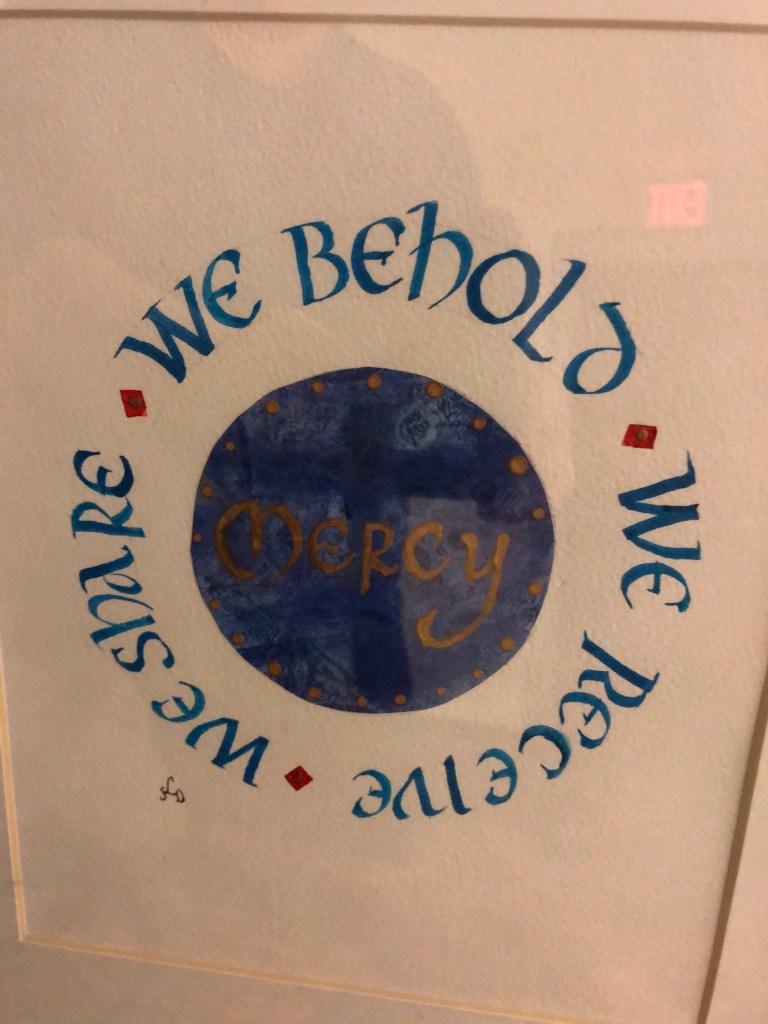
What is mercy?

My star gift this year is “mercy.”  What comes to mind when you hear that word?  My initial thought was that “mercy” is given to a prisoner by a captor. That goes along with the dictionary definition: Mercy is “compassion or forgiveness shown toward someone whom it is within one’s power to punish or harm.” After reading that I felt slightly guilty since it made me wonder what I had done that deserved punishment or harm. How bad was I that I required mercy?

On further reflection, I realized that every month I drive to the Mercy Center in Madison CT, a beautiful retreat center on the Long Island Sound that is run by the Sisters of Mercy. They are renowned for offering hospitality and welcome. The Mercy Center is a place of rest and renewal. That definition of “mercy” appeals to me. Who doesn’t need a safe, comforting spot where one will be loved and accepted? It sounds like healing and new life.

In order to learn about mercy, I’ve started a collection of quotes. Maybe you’ll be able to add to them – I have, after all, a whole year to immerse myself in the study of mercy. Here are some quotes that speak to my heart about mercy:

  • “Mercy and forgiveness must be free and unmerited to the wrongdoer.”
  • “It is mercy not justice or courage or even heroism that alone can defeat evil.”
  • “But go and learn what this means: ‘I desire mercy, not sacrifice’ for I have not come to call the righteous, but sinners,” (Matthew 9:13).

I’ve also been listening to songs with the word “mercy” in them.  This one is my favorite so far – it’s called “God of mercy (Prayer song)” by Lou Fellingham. Do you know any songs about mercy?  I would be glad if you could add to my collection. 

There is something both powerful and humbling about realizing that God gives to us what we need, not what we deserve. God offers forgiveness, love, new beginnings, and – mercy. We don’t have to earn those gifts. They are provided because without them we would be bereft. What if we could be so generous with others? What if we were that generous with ourselves?

If you have a star gift, I hope you are enjoying it. (And if you would like me to mail you one, you can message me your address).  I would be interested to hear what you have learned so far, what questions you still have, and where you are being led to explore. I will continue to immerse myself in learning about mercy and I will share what I learn with you.

In the meantime, be merciful with yourself and others.

Pray boldly!

John again was standing with two of his disciples, and as he watched Jesus walk by, he exclaimed, “Look, here is the Lamb of God!” The two disciples heard him say this, and they followed Jesus.  When Jesus turned and saw them following, he said to them, ‘What are you looking for?”’ (John 1: 35-38)

You might expect Jesus’ first recorded words to be preaching or teaching or expounding on some ancient text.  But in the Gospel of John, none of that happens. The first thing Jesus says is a question. He turns to his would-be disciples and asks them, “What are you looking for?”

            Jesus – the Messiah, the Son of God, the Light of the world – wants to know what is on their minds. What are you looking for? It’s another way of saying, “What are you seeking? What do you lack?”

            Jesus looks his potential followers in the eye and wonders, “What do you really, really want?”

            It is an invitation to powerful prayer. And yet how often do we hesitate to say out loud what is on our hearts and minds? We are so good at praying polite prayers that list the needs of others, never ourselves. We pray tentative prayers couched with caveats like “If it’s possible…”. Yet Jesus demands, “What are you looking for?” What do you want?

            When I hear this invitation to honest, from-the-heart prayer, I think about the good work my congregation with our local homeless shelter. Like so many congregations, we provide food, clothing, toiletries, gift cards, vouchers, and holiday gifts to the residents. That is a good thing to do. But if I were to pray an honest prayer – if I were to state what I really want – I would say, “I want affordable housing. I want job coaching. I want abundant access to mental health care.”

            But I often hesitate to offer that prayer because those things cost money and I don’t know how to make any of them happen. The complicated situation causes my heart-felt desire to die on my lips. But Jesus didn’t ask his disciples to come up with solutions. He wasn’t asking them if they deserved anything or if their requests were logical or even possible. Jesus simply asks, “What are you looking for?” What do you want?

            If we can’t name what we want, we can’t visualize it. If we can’t name what we are lacking, we might miss opportunities God is offering to us.

            “Pray boldly,” Martin Luther declared in 1517.

            “I have a dream,” Martin Luther King celebrated in 1963.

            Those are both invitations to trust God with our needs, our lacks, and our dreams. Saying it out loud is not a guarantee that it will come true. But offering our deepest needs to God is a step of faith. It is offering our hands, our hearts, and ourselves to the work of God all around us. It is trusting that God will hear our prayer and do marvelous things.

            And that is what I am looking for.

Into the Light!

Sandwiched between the busy seasons of Advent and Christmas and the more somber, thought-provoking weeks of Lent comes the quiet elation of Epiphany. This joy-filled season shines long after Christmas decorations have been tucked away and New Year’s resolutions have fallen to the wayside. The star lingers overhead, inviting us to venture into the unknown. Only when we move beyond the familiar will we encounter the new gifts God is offering.

  Epiphany is an often-overlooked but delightful season that offers hope in the midst of despair and light glimmering in the darkness. It reminds us of the journey of the magi, who followed mysterious messages to seek God’s promise. The star’s brilliance cajoles us to leave the safety of our routines behind.  The quiet assurance of a God who yearns to be found and who places directional signals in the sky lures us forward. God invites us to marvel at signs and wonders that point to God’s love and presence.

              Unlike Christmas and New Year, the season of Epiphany is not widely recognized in secular society. January is often regarded with the enthusiasm of a deflated balloon while the aftermath of Christmas is considered a dreary time to be endured. But in the church, Epiphany is a season of discovery, learning, and love.

In these weeks following Christmas, we are invited to bask in the light of the Christmas star. The star reminds us of the wise words that Jesus would grow up to proclaim, “People [do not] light a lamp and put it under a bowl. Instead they put it on its stand, and it gives light to everyone in the house” (Matthew 5:15). The light is provided by God who wants to be found by us. The heavenly beacon is not an exclusive signal meant for only a few people. It shines forth beckoning to all of God’s children. Anyone who looks up will see the sign. Anyone who dares to follow will discover the riches that wait underneath.

During Epiphany, dare to ask that star some questions.

  • Where am I being led in this New Year?  Is the star offering some course correction? Should I be like the magi and experiment with a “different road” that will lead me to new experiences?
  • What might I need to leave behind in order to start on this journey? What burdens or expectations can I set aside to lighten the load?
  • As the light shines into my life, what might I discover about myself? What do I value? What new parts of myself do I want to explore?
  • What does the light reveal in our world? What needs or injustices are calling out for compassion and kindness?

The season of Epiphany lasts for eight weeks. Let us celebrate this journey of exploration, knowing we are being led by the Light of Christ.

Advent: The Power of Love

Love songs fill the air this time of year. “All I want for Christmas is you,” and “I’ll be home for Christmas” remind us of heartfelt yearning for people and places that touch our lives. Billie Holiday’s bluesy “I’ve got your love to keep me warm”   rejoices that “no matter how much it may snow, I’ve got my love to keep me warm.”

That is the power of love. It can warm our hearts and calm our anxiety. Love can make us feel safe and cherished. Love is transformational – it can encourage us to do things that we might not otherwise dare to try.

 We celebrate love at Christmas – God’s love for us as well as the love we share with others. Yet Christmas is more complicated than a Hallmark movie; “happily ever after” can feel very elusive at times. Harsh realities remind us that many are struggling during “the most wonderful time of the year.”

What if your loved one is sick? What if promises of lifelong love ended in betrayal or loss? What if your beloved is no longer living? December 14th marked the 7th anniversary of the Sandy Hook school shooting that left 20 children and 6 educators dead. It made me think of people across the globe and close to home whose lives have been changed forever by violence. How do they approach a celebration of love while feeling devastated by loss?

            On the fourth Sunday of Advent, December 22nd, our church will celebrate a “Quiet Christmas.” This evening worship service is especially for those who desire Christmas’ peace and light but may not be feeling merry or bright. Whether someone is missing a loved one, wrestling with unemployment or financial concerns, addicted, estranged from family, or simply feeling out of step with endless loops of relentless Christmas cheer, this reflective service offers a time to simply “be.” In the quiet warmth of our sanctuary people can cry or offer prayers as they listen to God’s words of hope and healing.

            That is also the power of love. Love accepts us right where we are. Love comes into our pain and reminds us that we are not alone. Love walks the journey with us. Christmas celebrates the love of God who came into darkness and despair to offer hope and new life.

            This Christmas, if you are blessed with the company of those you love, cherish that.  Pause. Give thanks. Rejoice in the love that fills your heart.

If you are struggling or sad, know that you are not alone. Love is eternal. Love doesn’t die. The power of love promises always to be with us.

Love can give us the strength to carry on, one day at a time.

Advent: Signs and Wonders

“Are you the one who is to come, or are we to wait for another?” Matthew 11:3 (NRSV)

A little doubt can creep into Advent just about now. A little bit of wondering – as we celebrate the Prince of Peace, where exactly is the peace?

Here we are, halfway through our journey to Bethlehem, and we are busy proclaiming promises of hope, peace, and joy. But there is abundant evidence to the contrary. Unless we are not paying attention, we can’t help but notice there is a distinct lack of these gifts all around us. And it could cause us to wonder – do we have the story right?

 The nagging doubts and poignant questions of an imprisoned John touch my heart. I imagine the scene – here is John, who has devoted his life to the Messiah, first by waiting for him and then by preparing the way for him. John joyfully shouted to anyone who would listen, “Prepare the way of the Lord, make his paths straight” (Matthew 3:3). John was privileged to stand in the River Jordan with Jesus and overwhelmed by the honor of baptizing him. John witnessed the heavens opening and the dove descending. John heard the voice of God proclaiming, “This is my Son, the Beloved, with whom I am well pleased” (Matthew 3:17).

            But now the party is over. Jesus went on to his ministry and John finds himself in prison. A first-century jail would be a bleak place in any circumstance, but when a tyrant is the jailor and murder is on his mind, it was particularly grim.

            Is it any wonder that John’s last recorded words are formed as a question? Was I right? Did I back the right horse? Did I spend my time, my energy, and all my abilities on the truth?

Here is John’s final, urgent request – Tell me now, before it is too late. Are you – really – “the one who is to come, or are we to wait for another?”

            John needs to know if his time and efforts have been in vain. It is a question that we might ask ourselves as we see endless signs of corruption, violence, discrimination, and loss during a season that celebrates comfort and joy. It is a question that might nag at churches with dwindling congregations and diminishing influence. As we light candles and speak of hope, does doubt ever seep in?

            And yet. Jesus reassures John – and us – with his powerful reply; “The blind receive their sight, the lame walk, the lepers are cleansed, the deaf hear, the dead are raised, and the poor have good news brought to them” (Matthew 11:5).

            Yes, God is present. Not always in the way we expect. Not always on the timeline we anticipate. Not always with neat and tidy results. But life-giving, hope-producing, heartwarming change is going on right now. If we look, we will see it.

            Maybe we, like John, need someone to point it out for us. And maybe then we can rejoice and say, “Look! God is in our midst!” May that truth give us the courage to carry on.

Prayer

Faithful God, I believe. Help my unbelief. And help me be a messenger of your hope.  Amen.

(This reflection was first published in “Starting with Scripture” by the CT Conference of the United Church of Christ)

Advent: Sharing Joy

On Thursday, December 12th, our little town will celebrate a “Quiet Night in Woodstock.” Everyone is invited to light candles or luminaries and place them at the end of driveways and on stone walls. As we drive on our very dark backroads, it is heartening to see these small beacons of light glowing on the roadside.

The practice originated as a memorial to Judy Nilan, a social worker in our town’s middle school who was abducted and killed 14 years ago while jogging one afternoon after school. The luminaries commemorated that final route that she ran; the lights honored her spirit of compassion and giving.

The tradition has evolved and grown over the years. The Judy Nilan Foundation invites people to “share the peace of a quiet night during a busy time. Each year, the Quiet Night luminaries continue to spread across more of the town, inspiring many to take a break from the busy-ness of our lives.” This lovely ritual honors the spirit of someone who was so good at sharing joy and whose memory now encourages all of us to take some moments to reflect on what is important in our lives.

This coming Sunday, the third Sunday of Advent, is the Sunday of Joy. Judy Nilan was someone who offered great joy to students and adults through her understanding, caring, and attentive listening. Both the luminaries on Quiet Night and the three candles on the Advent wreath invite us to think about those who have brought joy into our lives.

Our lives are often so busy that we rush by special moments and barely acknowledge cherished friends or family. This week, take some moments and consider – who makes you laugh? Who makes you smile when you think of them? Who understands you when no one else does? What glimpse of beauty warms your heart? Take time to remember a moment when joy broke into your life. Give yourself the gift of re-living that occasion. Then give thanks for it.

Joy can be a rare commodity in a world that is often harsh and unfeeling. Joy is something to be cherished. Joy is something to share. These tiny points of light encourage us to notice glimmers of joy in our lives – and then to pass it on.

Advent: Praying for Peace

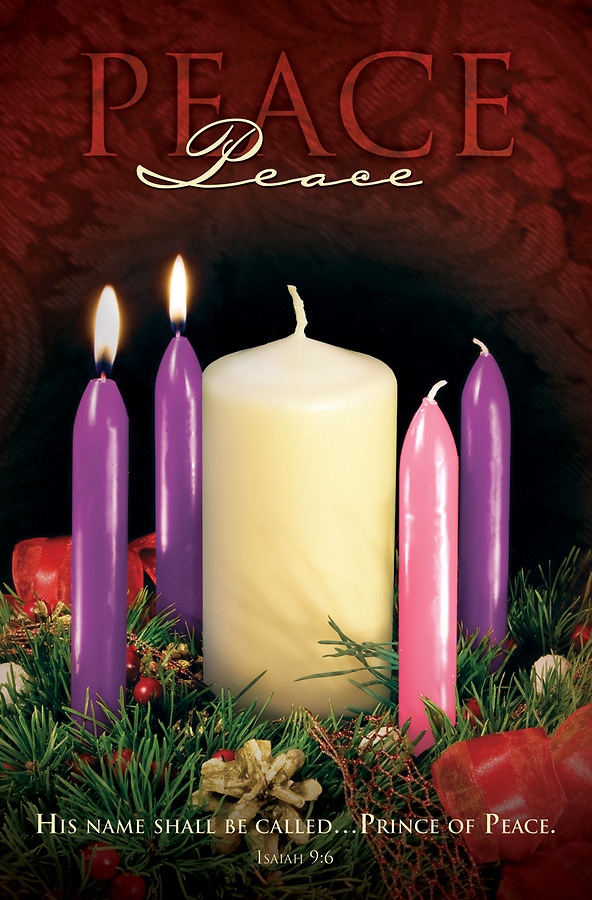
December 8th will be the second Sunday in Advent, the Sunday of Peace. As we light two candles on our Advent wreath, we will give thanks for God’s gifts of Hope and Peace.

It would be understandable if someone in the congregation raised a hand to ask the obvious question, “What peace are we celebrating? Where do you see peace in our world today?”

Certainly not in New Orleans, where 10 people were shot this week.

Not in Hong Kong where rioters demand free speech and increased self-determination.

Not in too many homes where incidences of domestic violence are on the rise.

Addiction, racism, prejudice, misogyny, and bullying are all forms of violence which are prevalent in our society and across the globe. 

It is enough to make one hesitate about lighting a candle of Peace.

As I pondered these troubling truths, I came across this beautiful prayer:

God of life,

Every act of violence in our world, between myself and another destroys a part of your creation.

Stir in my heart a renewed sense of reverence for all life.

Give me the vision to recognize your spirit in every human being, however they behave towards me.

Make possible the impossible by cultivating in me the fertile seed of healing love.

May I play my part in breaking the cycle of violence by realizing that peace begins with me.

The painful honesty of this prayer touched me. Then I discovered that this prayer had been written in the 7th century. It was oddly reassuring to me to be reminded that people of faith have prayed for peace across the centuries and through great tribulation. They have offered themselves up, as Saint Francis did, as instruments of God’s peace and asked to be used as messengers of God’s vision for our world.  

 This prayer was written by Saint Ethelburga who, I learned, was the founder and abbess of a double monastery (a monastery that housed both men and women) in England.  The abbey existed for 900 years until it was destroyed (ironically) by the violence of King Henry VIII who oversaw the disillusion of all the monasteries and abbeys in England, Wales, and Ireland.

Yet despite the efforts of a powerful king, this eloquent prayer has survived. On the second Sunday of Advent we will join our prayers with hers as we celebrate the Sunday of Peace. The Season of Advent does not celebrate accomplishments but rather voices God’s intention for God’s people.

God desires that we live in peace.

God desires that we treat one another with kindness and respect.

God desires justice and equality for all of God’s people.

So on Sunday we will light our candle of peace and together with Saint Ethelburga remember that peace begins with each one of us.

Advent: A New Beginning

Whenever I hear people talk about Christmas, I hear the word “stress.” Even enthusiastic holiday-celebraters admit to a certain amount of dread this time of year. And with good reason – our society depicts Christmas as a set goal with pre-determined outcomes. There seem to be a lot of “shoulds” connected with Christmas. There “should” be a perfectly decorated tree with beautifully wrapped gifts. There “should” be delicious food for happy guests (who all get along) around a creatively decorated table. Carefully decorated cookies “should” be baked with happy, well-rested, non-whiny children. And everything “should” be perfectly prepared by this unmovable deadline.  Is it any wonder that Christmas can feel like an overwhelming burden?

 The season of Advent, which begins on December 1st, is very different. While Christmas can feel like a marathon march to an exhausted finish line, Advent is the gift of a journey with an unknown destination. Christmas is about completion; Advent is discover and wondering. Christmas might feel proscribed; Advent is surprise and discovery.

Advent has a sense of mystery about it as we follow, search, wonder, and venture out in faith. It is an opportunity to trust as God leads us into an unknown future. The possibilities are as unlimited as our Creator.

During Advent we remember those who said “yes” to invitations in the past.  The shepherds hear Good News of great joy and go on a journey of discovery to “go and see” what God has done. The wise men respond to the flickering light of a star and place their faith in God out of the familiar and into the unknown. Mary begins her life-changing journey with an unshakeable faith. Joseph trusts that these incomprehensible events will reveal God’s love and purpose.

Into each journey is interwoven the theme of “do not be afraid.”

This Advent, do not be afraid…

 although you venture into the unknown.

although you feel very alone.

although the end result is not clear.

The season of Advent reminds us that God is “Emmanuel,” which means “always with us.” What new thing do you imagine or dream of? Where might God be inviting you to go? What unknown is placed before you and where is God in that? What do you need to leave behind in order to discover this new thing that God is doing?

 Advent is about mystery and possibility and wonder. A candle glows to provide just enough light to take the next step. The promise of Advent is filled with possibility and new life.

Where will your Advent journey take you?

I wish you the joy and blessings of Advent.

Advent: A New Beginning

Whenever I hear people talk about Christmas, I hear the word “stress.” Even enthusiastic holiday-celebraters admit to a certain amount of dread this time of year. And with good reason – our society depicts Christmas as a set goal with pre-determined outcomes. There seem to be a lot of “shoulds” connected with Christmas. There “should” be a perfectly decorated tree with beautifully wrapped gifts. There “should” be delicious food for happy guests (who all get along) around a creatively decorated table. Carefully decorated cookies “should” be baked with happy, well-rested, non-whiny children. And everything “should” be perfectly prepared by this unmovable deadline.  Is it any wonder that Christmas can feel like an overwhelming burden?

 The season of Advent, which begins on December 1st, is very different. While Christmas can feel like a marathon march to an exhausted finish line, Advent is the gift of a journey with an unknown destination. Christmas is about completion; Advent is discover and wondering. Christmas might feel proscribed; Advent is surprise and discovery.

Advent has a sense of mystery about it as we follow, search, wonder, and venture out in faith. It is an opportunity to trust as God leads us into an unknown future. The possibilities are as unlimited as our Creator.

During Advent we remember those who said “yes” to invitations in the past.  The shepherds hear Good News of great joy and go on a journey of discovery to “go and see” what God has done. The wise men respond to the flickering light of a star and place their faith in God out of the familiar and into the unknown. Mary begins her life-changing journey with an unshakeable faith. Joseph trusts that these incomprehensible events will reveal God’s love and purpose.

Into each journey is interwoven the theme of “do not be afraid.”

This Advent, do not be afraid…

 although you venture into the unknown.

although you feel very alone.

although the end result is not clear.

The season of Advent reminds us that God is “Emmanuel,” which means “always with us.” What new thing do you imagine or dream of? Where might God be inviting you to go? What unknown is placed before you and where is God in that? What do you need to leave behind in order to discover this new thing that God is doing?

 Advent is about mystery and possibility and wonder. A candle glows to provide just enough light to take the next step. The promise of Advent is filled with possibility and new life.

Where will your Advent journey take you?

I wish you the joy and blessings of Advent.