It could have been me

Whenever tragedy hits the news I wonder – could that have happened to me?

Last summer in Connecticut a man was struck by lightning when he took shelter in a beach pavilion.  He thought he would be safe; he didn’t realize a roof alone wouldn’t protect him. I’m not sure I would have known that either.  I might have done the same thing.  That could have been me.

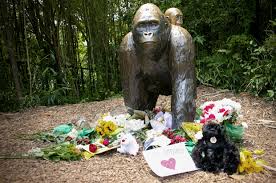
That thought crossed my mind when the little boy fell into the gorilla enclosure at the Cincinnati Zoo.  Many people accused the mother of being neglectful or unfit.  But I remember too well what it was like trying to keep track of our three children under the age of four. Although I would jokingly say that their guardian angels worked overtime, there were many close calls and many occasions when events could have turned tragic.

There was the time at Sesame Place, a wonderful theme park outside of Philadelphia. One moment we were enjoying the antics of Elmo; in the next breath, my 3-year-old daughter disappeared. I frantically looked between the legs of strangers, under bushes, and behind rides.  She was nowhere to be found. We ran to the “Lost Child” center and there she was – grinning and laughing at the sight of her mother escalating from fear to anger to joy in a second’s time. Kids move fast. They slip away. They don’t think about consequences. When I heard about the boy at the zoo, I thought – that could have been me.

Or the toddler who was attacked by the alligator at Disney World.  Would I have known that “no swimming” meant not even wading up to a toddler’s knees? Would I have realized that danger lurked at the “happiest place on earth?” Would I have resisted a squirmy, perhaps fussy two-year-old on a hot, humid night or would I have said, “yes, let’s cool off our toes in this lovely lake?”  That could have been me.

Could me 2

I am that mother

  • Who put a Band-Aid on her daughter’s elbow, not realizing that her arm was broken.
  • Who allowed her son to careen down a hill on his bike, not imagining that he would plow down his siblings like a bowling ball barreling down the alley.
  • Who didn’t listen to her son the 15th time he reported seeing a bear while camping at a national park. “Just go and play so I can get supper together,” was my reply when, just like Peter and the Wolf, that time would lead to an almost too-close encounter.

Or what about my own antics from my distant youth?

  • Sleeping on a roof top in Athens, Greece?
  • Selling my blood in Italy to earn money for an unplanned boat ride?
  • Accepting a ride from a stranger to chase after friends on a late night in a strange place?

Those incidents (and many more) could have ended badly. There could have been a news story detailing an accident or abduction or assault. That could have been me.

We are so quick to judge when we hear tragic news stories.  Instead of jumping on the condemnation express, perhaps we could listen with grace-filled ears and then wonder – could that have been me? Haven’t there been times when it was only sheer luck and not superior knowledge or skill that kept me safe that day?

It’s more than just placing ourselves in another’s shoes. It’s realizing that on this very human journey, we make mistakes. Events occur that we didn’t plan or anticipate. Accidents happen. Our judgment is not always flawless. And in a moment, lives can change forever.

It could have been me.  This time, it wasn’t. So let me hold in prayer those who are suffering today.
candle


Passages

For a thousand years in your sight are like yesterday when it is past, or like a watch in the nightThe days of our lives …are soon gone, and we fly away.”   Psalm 90:4, 10

Permit me to reminisce for a few moments.   In March 1993 there was an enormous, airport-closing blizzard which delayed our much-anticipated trip to Bolivia to pick up our infant son Daniel. After many delays, frantic phone calls, and fervent prayers, Roger and I landed in warm, sunny Cochabamba and embarked on a life-changing journey.  The details are still fresh in my mind and in many ways it seems like it was just yesterday; it is hard to believe that our beloved son will graduate from college on May 17th.

These are the markers of our lives – birth, death, baptism, wedding, birthdays, graduations – all those special occasions remind us of the passage of time and the preciousness of life, love, and relationships. This congregation has been part of our journey.  Before we departed for Bolivia there was a marvelous baby shower for us in fellowship hall.  When we returned, many of you met Dan even before his grandparents did.  He was baptized here. When I was a nervous young mother, he would be quietly passed from one set of loving arms to another while I led worship, preached, and chatted during coffee hour. It was a gift to know that he was well cared for by his church family.  We have pictures of him in the Christmas pageant (making the requisite transition over the years from sheep to shepherd to King Herod), riding his decorated bike at the Jamboree, singing in his blue RSCM robe, dressed up in a tie and jacket for confirmation, and singing with the men’s chorus on Palm Sunday.

Passages. Days, weeks, months, and even years slipping away. Children growing up and adults growing older. All of us are left shaking our heads and wondering, “Where has the time gone?”

Time does fly by and we seem in a hurry to try to catch it. I heard a wonderful sermon once entitled “Worshiping a 3 MPH God in a 100 MPH world.”  We live in a 24/7 society where we can be busy every moment if we choose to be. The pace can be so frantic that we may not even notice the people around us or the God who weaves in and through our lives. In a blink of an eye, it seems, years can go by.

We are the only ones who can decide to make changes in our own lives – we can choose to stop, or at least slow down.  How will we spend our precious time?  Who do we want to spend time with?  What dear friends are you always too busy to visit? What activities really matter?  Which ones will make a difference? When was the last time you noticed the beauty of the place that we all live – and when did you pause to give thanks for that blessing?

Here is an invitation to be aware of the passages that are part of all of our lives. Can we intentionally decide to cherish the moments of our lives and to give thanks for the people who enrich our days?  Take a moment right now and give thanks for some special person in your life.  And then take another moment to let them know just how much they matter.

Blessings on your journey through the many passages of life.

Graduation

Death in the Digital Age

The death was announced on Facebook. The unexpected, shocking news spread like wildfire as one person after another shared the sad posting.

Soon the grieving widower’s Facebook page was flooded with beautifully touching memories and lovely pictures of his deceased partner. On the plus side, the bereft family didn’t feel quite so alone in this terrible time. Within seconds they started hearing from friends and relatives across the globe. The messages of love and caring offered real support and comfort.

But what to do with the awkwardness of Facebook? Does one “like” a status that carries such grievous news? If the status isn’t “liked,” does it indicate a lack of caring or attention? What is the “new normal” for responding to life events in the virtual age?

What sort of comment is appropriate? If one writes a heartfelt “I’m so sorry for your loss,” or “you are in my thoughts and prayers,” have the social obligations been met? Or does one still need to take that old-fashioned route of going to a store, buying a sympathy card, foraging for a stamp, and actually mailing a handwritten note?

But I wonder – does even the most carefully crafted Facebook post go far enough? Do people then feel released from the necessity of actually attending the funeral and listening to the eulogy because, after all, they’ve been in touch?

Could all of our grieving and consoling be done virtually? Should it be?

Facebook might be an unavoidable part of our everyday lives. But it isn’t a substitute for hands-on caring. Our digital friends can’t:

  • Cook a meal or provide a casserole.
  • Hold a hand or provide a hug.
  • Sit in stunned silence. Just sit and be together in the hurt.

So – by all means, go ahead and post, tweet, chat, and share. But then show up in person. Send a tangible reminder – like flowers or a card – of your caring.

Remember, when God wanted us to know that we were loved, God gave us the gift of being incarnate – really being here, in the flesh. There is no substitute for that.

Very often the best thing we can do for one another is simply be there.

We don’t have to provide words or answers or profound sayings. But showing up matters.

We can be messengers of the Good News that God is present – really with us – exactly when we need God most.

                This reflection first appeared in  New Sacred  – the new blog of the UCC.  Please take the time to check it out!


2015 in review

This was my first year as a blogger.  Kind of fun to think that my words have been read in over 25 countries, by more than 2600 people!  I hope you will spread the word so more people can join the conversation about discovering God in our everyday lives.

Happy New Year!

Here’s an excerpt:

A San Francisco cable car holds 60 people. This blog was viewed about 2,700 times in 2015. If it were a cable car, it would take about 45 trips to carry that many people.

Click here to see the complete report.

Reflections of Hope

I am about to do a new thing; now it springs forth, do you not perceive it?
I will make a way in the wilderness and rivers in the desert.
   Isaiah 43

On November 13-14th, I had the pleasure of leading a women’s retreat with my friend Patti.  Twenty-four women from the First Church of Granville (Ohio) gathered in the beautiful Pilgrim Pines retreat center to focus our thoughts and spirits on the theme “Hope and Transformation.”

These are some reflections that emerged from our time away. Some words that came to mind when people thought about hope:

  • Perseverance
  • Authenticity
  • Trust
  • Relationships
  • Friends
  • Love
  • Passion
  • Growth
  • Openness
  • Hope “gives you a reason to get up in the morning.”
  • Hope is “the thing with feathers” (from Emily Dickinson poem)
  • “In the Bulb There is a Flower” (hymn)

People talked about how there can be many “flowerings” or periods of growth over the course of a lifetime. It is important to remember – and be patient in – the times of dormancy that come in between those growth spurts. Resting and regrouping are a vital part of renewal. “A period of dormancy allows strength to build to flower anew.”

We were encouraged to look for signs of new life around us and within us.  “Celebrate the buds” that will gradually evolve into blooming glory.

Sometimes it is necessary to let go of something or someone in order to move forward.

Some quotes:

  • “When it is dark enough, you can see the stars.”
  • Night sky
  • From Library of Soulsby Ransom Riggs (the 3rd novel of Miss Peregrine’s Peculiar Children trilogy):  “And it occurred to me, standing there, just breathing with her, quiet settling around us, that those might be the three most beautiful words in the English language.  ‘We have time’.”  Doesn’t that describe this weekend perfectly?  We had time, didn’t we?  Time to stand together and breathe, with the quiet settling around us.  Thanks for that gift, Patti and Sue.   Thanks for knowing that this is just what we needed, whether we knew it or not.
  • “It is said when one door closes, God will open another. But it can be hell in the hallway.”

Hallway


It is poignant to remember that while we were ensconced in this idyllic, peaceful setting, murder and mayhem were taking place across the globe – the attacks in Paris, the ongoing suffering of the Syrian refugees, unresolved conflicts in the Middle East, to name just a few.  We search for hope in the midst of an imperfect world, trusting that the God of new life journeys with us.  Hope does not ignore the messiness or pain of real life, but instead relies on God’s promise to be with us in the midst of anguish and loss.

We enjoyed Mary Oliver’s  Morning Poem and Holli’s interpretive movement.

Our closing song that Mindy taught us:  “Dance of the Nations”

Round and round we turn

We hold each other’s hands

And lead ourselves in a circle

The time is gone

The dance goes on

circle dance

Open doors, open heart: The Rev. Jonathan Chapman

Jonathan Chapman
“This is my commandment:that you love one another as I have loved you.”  John 15:12

Some of the words that come to mind when one meets Jonathan Chapman: enthusiastic, passionate, energetic, caring and creative. It is immediately clear that he has immersed himself in his role as the pastor of Westfield UCC in Killingly CT.  He is dedicated to bringing this “diamond in the rough” back to some of its former glory as a downtown church in an aging, struggling former mill town.

After graduating from Elon University and Candler School of Theology at Emory University, this southerner ventured north to find a church that would be a good fit for his preaching and musical skills. Although Jon would be the first to say that the religious culture in New England is very different than in the South, he immediately felt called to serve the compassionate and caring congregation he discovered at Westfield. Westfield had encountered many of the challenges of downtown congregations – declining attendance, over-stretched budget, and long-delayed maintenance in an aging building that presents nightmares to anyone with mobility challenges (think: Stairs. Lots and lots of stairs).  The tiny congregation recognized something in Jonathan and called this “young, inexperienced, green” minister to be their pastor. Just as they identified something special in him, Jonathan discerned the great potential hidden beneath the enormous steeple that towers over Main Street. Hidden in plain sight was a congregation with tremendous heart and the desire to make a difference right there in their neighborhood. Although the church had wrestled with notion of closing their doors forever, here was a minister who had the willingness to try to lead them back to life; they were a good fit for one another.

Sitting in his cramped office, there are signs everywhere of the multiple projects that demand Jonathan’s attention. There’s a pile of old church photographs on one table, a tilting tower of rolled up banners for a variety of church celebrations tucked behind a chair, and stacks of brochures precariously balanced on a file cabinet. His desk is overtaken by not one but two computer screens, filled with stunning web images that Jon designs for his own church in addition to his “side job” as web designer until the church can afford to pay him for the more-than- full-time work he offers. His rolling chair glides beneath him as he gestures with excitement about the upcoming anniversary celebration of the church (300 years!) and the accompanying capital campaign to repair the steeple, renovate the building, and install a much-needed elevator (remember all those stairs!).  The fundraising goal, appropriately named the Aspire campaign, is just one sign of Jonathan’s dedication.  “Look at this!” he exclaims as he pushes back the chair and roots around yet another stack of papers. “It’s the original blueprint of the building!  We can see their vision for this church in this place.” It is a vision that Jonathan and the congregation have now made their own as they discover ways to minister to the many needs all around them.

As we tour the church, I have the opportunity to meet Jon’s talented husband Greg Gray seated at the pipe organ in the beautiful New England-style Congregational meeting house practicing for the upcoming anniversary celebration concert. Jonathan is in his glory while standing in the middle of the sanctuary, describing the transformation that takes place each December when the congregation hosts “Victorian Christmas” celebrations every Sunday evening. Amidst beautiful decorations and surrounded by costumed performers, visitors experience the Christmas story that can be described “either as a show or a spiritual moment, depending on what that person needs that evening,” says Jonathan. “But it gets them in the door and lets everyone know that this church is alive and sharing the love of Jesus.”

Getting people through the door is the task that every church must consider.  Jonathan has taken that challenge literally. He created a set of six doors in rainbow colors which are placed on the sidewalk outside the church whenever there is a church supper or event or during a town celebration. “Why put your welcome mat inside your front door?” Jonathan asks, “We want the world to know they can come inside.”  The visual invitation is clear and echoes part of Westfield’s hospitality: “everyone, everyone, everyone is welcome here.”

If people accept the invitation, they will encounter a growing congregation with a wide variety of ages. Drawings done by young children hang on the walls where older members tuck their walkers away during worship.  Visitors will see the “altarscapes” that Jonathan creates to visually convey a Scripture story or church season. The white walls of the sanctuary create a blank canvas for Jonathan’s artistic vision. “Fabric is our paint,” he explains, so “we can tell God’s story visually.”

For Jonathan, part of God’s story is one of inclusion and love.  Westfield officially declared their Open and Affirming welcome to all of God’s children in June 2014. Positioned right on Main Street, Jonathan’s goal is to have the church live out its calling to be the heart of the town, sharing God’s love in a variety of creative ways. High above the street, the deep, rich tones of the church bell ring out across the town, sending a message of love, hope and renewal that can draw generations together. Here is Westfield UCC, starting its fourth century of ministry proclaiming the Good News: the doors are open, everyone is welcome, come on in!Westfield doors

What kind of Christian?

I believe

Jesus said: “‘Love the Lord your God with all your heart and with all your soul and with all your mind. This is the first and greatest commandment. And the second is like it: ‘Love your neighbor as yourself.”  Matthew 22: 36-39

There have been a multitude of people who say they are motivated by their faith to engage in actions I often find incomprehensible.  Donald Trump states that he reflects a deep Presbyterian faith. Kim Davis refuses to issue marriage licenses because she is “obeying God’s law.” And then there is the outrageous Westboro “church” that protests at funerals, targeting broken-hearted people with their venom and scorn.

Such claims to Christianity make me cringe. I shake my head and say, “That isn’t what I believe.  I’m not that kind of Christian.”  On the other hand, I refuse to describe myself with a negative or by saying what I am not. Instead I want to consider what I do believe. What kind of Christian am I?

This reminds me of the final paper I had to complete in seminary so many years ago. As a prerequisite to graduation, each of us was required to write our personal “credo” as we attempted to describe and define what we believe.

No matter what faith (or other) tradition you follow, this is a good exercise. It can be helpful to try to articulate what is most important to you – what are your values? What core beliefs define your life? What guides your actions?

So here is my working list.  While God may stay the same yesterday, today, and forever,   my understanding of God changes and evolves as I wend my way through life (I’m avoiding the phrases “grow older” or “age”).  Based on what I know and have experienced up to this point, this is the kind of Christian I yearn and endeavor to be every day.

I am a Christian who…

  • Believes it is all about love. God loves us – all of us, always, unconditionally, with forgiveness and mercy and the opportunity for new life. We are asked to share that love with others.
  • Thinks there is more than one way to know God. I recently saw a bumper sticker that declares, “Prays well with others.” If we could do that, it would solve a lot of problems.
  • Believes God is the God of second chances. God is always ready to forgive, help dust us off, get us back on our feet, and encourage us to try again.
  • Believes we break God’s heart regularly – when we exclude people, when we judge others based on their skin color, when we dismiss people of other cultures, traditions, and religions. I believe God loves us anyway and continually offers us opportunities to learn, grow, and change.
  • Discovers God while I write in my journal, when I go on walks, when I listen to others ponder their faith, when I take time to read and reflect. God is always there and it is my loss when I feel too busy to notice.
  • Is wary of anyone who claims to absolutely know the will of God. People who think they have all the answers make me nervous. If anyone can clearly describe God without doubt or reservation, I suspect that is not God.
  • Believes in prayer, even when I don’t completely understand it. I don’t know why some prayers seem to go unanswered or why the answer is no. But I have witnessed the power of prayer and believe that praying for one another is one of the greatest gifts we can offer.
  • Still has a lot of questions. I don’t know why heartbreakingly bad things happen to perfectly nice people. I am humbled by the grief I have encountered in people’s lives and also in awe by the acts of kindness, love, and compassion I have witnessed.

In the end, I rely on the words of Jesus

  • Love God
  • Love your neighbor
  • Love yourself

Simple words that take a lifetime (and more) to live.

What do you believe?

Conversation with a LGBT Trailblazer: The Rev. Alice O’Donovan

Alice

God says, “I am the Lord your God, the Holy One of Israel, your Savior…You are precious and honored in my sight, and…I love you.” (Isaiah 43)

Do you remember 1988? 

  • The L.A. Dodgers won the World Series.
  • Lloyd Bentson informed Dan Quayle, “Senator, you are no Jack Kennedy.”
  • George Bush assured us, “Read my lips: no new taxes.”
  • Nike told us to “Just do it.”
  • Lemon-flavored Snapple iced tea was introduced.
  • A plane was shot down over Lockerbie Scotland, killing 270 people.
  • Popular movies included Rain Man, Big, and Beetlejuice
  • Some top TV shows were The Cosby Show, Cheers, and Murder, She Wrote.

In 1988, our country was in the midst of the AIDS crisis, a still little-understood disease that was causing terror and panic across the land. By 1988 over 81,000 cases of AIDS had been reported; over 61, 000 people had died.1

In 1988 Alice O’Donovan made history in the Connecticut Conference of the United Church of Christ by being the first openly gay person to be ordained.   It isn’t easy being first. I admire the courage and tenacity that enabled Alice to be a trailblazer and to answer the call to ministry. She was a pioneer and that is never an easy task.

When she and I met recently at a local restaurant to share a delicious lunch of Pad Thai, she reflected on the challenges and blessings of her path to ordination. Even after all these years, the pain and the joy of those memories can bring tears to her eyes.  Along the way she encountered ignorance, intolerance, betrayal, and a myriad of hurtful comments and actions. She also experienced the grace, kindness, care, and encouragement of people who recognized her gifts and supported her calling.

Every time there was a roadblock or challenge to her vision to pursue ordination, God seemed to place a messenger who delivered enough encouragement and grace to enable her to continue.

I am amazed Alice didn’t give up; I am inspired by her faithfulness.  Her home church refused to write the required letter of recommendation for her. The board of deacons instructed the minister to dismiss Alice from their congregation because of her sexuality.  Without a home church, there is no path to ordination.  When the Conference Minister heard about the church’s refusal, he encouraged Alice to persevere because, he said, it was clear that “she had all the requisite gifts to be an excellent minister.”  The Congregational Church in Storrs welcomed her in and invited her to be part of their church family; they were proud to sponsor her as a candidate for ministry.

Then there were the logistical challenges – Alice had to commute over 170 miles each week to take classes at the Episcopal Divinity School in Cambridge. Coming from a busy household with three young children, that seemed completely overwhelming.  A member of her new home church pulled her aside during coffee hour one Sunday. She offered to watch the children and prepare a meal for the time-stretched family every week. This kindly soul looked Alice in the eye and said, “You belong in seminary.” Thank God for people who have both the insight to discern the gifts of others and the practical wisdom to lend a helping hand.

After years of taking classes, writing papers, doing field work, completing requirements, and putting thousands of miles on her car, Alice was finally ready for her Ordination Council.  One minister informed her that he would be attending but planned to vote against her. “It’s too bad,” he said, “you’re so well-qualified and you have all your ducks in a row.  But  you’re gay.”     With that pronouncement on her mind, Alice presented to the Council her paper describing her thesis based on the Apostle’s Creed. The Dean of the Yale Divinity School would later request a copy of her paper to use as an example for future students who needed to clearly define their faith.

The Ordination Council was comprised of a series of questions and answers about Alice’s faith and theology. It also included some who objected to her candidacy and who asked her to declare her sexuality in front of the crowd gathered for that momentous meeting. Finally Alice was asked to go to another room so the community could vote. When she re-entered the sanctuary, the assembly rose to its feet to applaud and cheer as she walked down the long center aisle of the church. Her candidacy had been approved by the voting members, 21-7. Alice O’Donovan could be ordained.

Her first call was to a small, rural church with no running water in Peru, Vermont. In her typical self-deprecating way, Alice maintains that the “minister no one wanted got the church no one wanted to serve.” Yet together they shared the Good News of a God who cares, welcomes, heals, and renews.

In the years since 1988 Alice has served a number of churches.  She compares her different calls as a pastor to the experience of trying on a series of shoes; each successive one fit slightly better than the previous one. I wish her ministry was considered newsworthy simply because she is an excellent preacher and a compassionate caregiver.  Too often, however, it was her sexuality that drew people’s attention.  When she became the pastor of the South Windham (CT) Congregational Church in 1991, the New York Times covered the story and put her picture on the front section of the Connecticut Section.

Alice continues her ministry even as she enjoys semi-retirement. Later in October, she will be the guest preacher when the Westfield Congregational Church in Danielson CT marks its 300th anniversary. Every year she presents a workshop at the True Colors conference, a statewide gathering of LGBTQ youth held on the UConn Campus. She poses the question, “Is the Bible the word of death or the voice of hope for the LGBTQ community?”  She says that the answer to that question is “yes.”

Alice wisely observes that people can prove or disprove almost anything using Scripture; the problem is not God – it is how people misuse the Bible. The most important thing to remember, she says, is that God loves you.  Always.

That has been the ministry of Alice O’Donovan. She has lived out her conviction that all of us are called to serve God.  She says, “Conversion is my favorite game. I want everyone – really, everyone – to know they are loved by God.”   She has watched the world change since 1988 and she has been part of that change. The world – and the church – is a better place because of her compassionate ministry.

1 http://www.amfar.org/thirty-years-of-hiv/aids-snapshots-of-an-epidemic/  Captured October 2, 2015

Windjammer retreat: a time to renew my spirit

Very early in the morning, while it was still dark, Jesus got up, left the house and went off to a solitary place, where he prayed.  Mark 1:35

Where do you go for quiet time?  What do you do when you need to “recharge your batteries”?  Where do you find God?

It’s important to make time for yourself, to slow down the busy pace of your life, and take some time away from all the electronic distractions of our lives. During the last few summers, I have been fortunate to lead a retreat aboard the windjammer schooner Lewis R. French. I would like to invite you to join me on July 10-14, 2016. It is a unique way to follow the commandment to take a time of Sabbath. Sailing along the coast of Maine provides a wonderful opportunity to enjoy good fellowship, delicious home cooked meals (including a lobster bake on the beach!), and the glory of God’s creation.

Each year I join with 20 other people to rejuvenate our spirits as we relax on board this beautifully restored 1871 schooner. We start each morning with worship and reflection as we gaze out on Penobscot Bay. We are well cared-for each day as we feast on home-cooked meals brought up on deck from the galley below.

The time slips by; days are filled with reading, knitting, chatting or simply watching the stunning scenery as we catch glimpses of Maine wildlife. There is even the option of trying your hand on deck if you want to hoist the sails, furl the jib or take a hand at the helm.

Each day includes optional “shore leave” when (depending on the setting) there might be a chance to shop, hike, or sit on the beach. In the quiet of the evening, you can lie back and be amazed at the spectacular array of stars as you enjoy the sound of waves splashing against the boat.

I would love to share this experience with you – please be in touch with me if you’d like more information.  In the meantime, enjoy the changing seasons and be on the look-out for ways to feed your spirit and nourish your soul.

Living in the land of “we’ll see”

Fork in road

The congregation of the people of Israel came to the wilderness…” (Exodus 16)

  • Do you ever feel like you don’t know what tomorrow will bring?
  • Are you in a time of transition and it isn’t clear what direction you’re heading?
  • Is the future unclear or perhaps a bit daunting and frightening?

In our house we call those in-between times of life “the land of ‘we’ll see’.”  We end a lot of conversations with “we’ll see” because we simply don’t know what is going to happen next or how it will all turn out.

  • My parents are moving into assisted living. Will they be happy?  Will they enjoy their new circumstances?  We’ll see
  • Two of our children are graduating from college this year. What will they do next? Will they find jobs?  How will they live on their own?  We’ll see
  • Winter is coming – what will it be like? Will we experience as much cold and snow as last year? We can’t know that yet. So – we’ll see

What transitions are you experiencing?  Maybe you are caring for a loved one who is sick. Maybe you are changing jobs. Life brings us a variety of changing circumstances.  Children grow up, jobs change, friendships shift, parents grow older, illnesses come and go, our own abilities alter – nothing stays the same.  Any of these events can bring us into the land of “we’ll see.”

It is not an entirely comfortable place to be. It is never easy to have more questions than answers. It is human nature to want to plan and count on something. We like to know what we’re dealing with and how things will turn out. The hard truth is that certainty is simply not always available.

The land of “we’ll see” is like the wilderness described in Exodus. The people of Israel escaped their captivity by crossing through the Red Sea. Suddenly they found themselves facing a daunting wasteland with no clear direction and no end in sight. They were entering into the land of “we’ll see” as they searched for a new identity and got accustomed to their new reality.  The way forward was not clear.

Here’s the Good News – God is in the wilderness with us. God lives in the land of “we’ll see.” God reassures us that we are not alone in those troubled, turbulent times of our lives. Day by day and moment by moment, God journeys with us, surrounding us with the strength, compassion and courage we need.

We may not have a lot of answers.  But we are assured of God’s love and presence.

Blessings on your journey.