Praying for strangers

Who do you pray for? Would you pray for someone you don’t know?

 On October 6th we celebrated World Communion Sunday. It is interesting that this celebration was originated in 1936, which was another time in history when countries and individuals needed to be reminded that we are all beloved children of God. World Communion Sunday celebrates our inter-connectedness as we remember that our actions (or lack of action) has an impact on others.

World Communion Sunday is, by definition, a Christian commemoration but our worship lifts up countries, religions, and people across the globe to ask for God’s blessing.

            One of our practices on this special Sunday is to use a variety of breads during communion. Instead of the usual white bread that symbolizes the Body of Christ, the congregation was invited to choose from breads representing different parts of the world. South American tortillas, Asian rice cakes, and Israeli matzos graced our communion table. Breads of different colors and textures like pumpernickel, rye, corn, and Italian represented the diversity of God’s people and the richness of our unique cultures and heritage.

            As people entered our sanctuary, everyone received a slip of paper with the name of a country. In the days ahead, we are all encouraged to learn a little bit about that country and offer prayers on behalf of the people who live there.

            “My” country is the Maldives. While I recognized the name enough to know that they are islands, I couldn’t have told you much more than that.  I have since learned that the Maldives are a collection of 1,190 islands and atolls (my new vocabulary word: a reef made out of coral) southwest of India in the Indian Ocean.

 After watching a number of travel videos, I was tempted to put a trip to the Maldives on my bucket list but I suspect the expense will prevent any first-hand exploration of this beautiful country. My first impression of this country was “island paradise.” However, when I learned that their highest point of elevation is a mere 8 feet, my second thought was “island on the brink of disaster.” Rising sea levels cannot bode well for this fragile environment.

So I will pray for the people of the Maldives. Why might we pray for people we don’t know? These prayers are not so much to nag an already compassionate God to care about God’s people, but are much more a celebration of our connection to one another. They are also a much-needed reminder that when I am personally powerless to lend a hand (in the Maldives or elsewhere), I can trust that God’s Spirit of love, peace, and comfort is with those in need.

These prayers ward off feelings of despair and helplessness and may well nudge me to take action where I can.

So go ahead and pray. Pray for your loved ones and pray for those you’ll never meet. And trust that the God of yesterday, today, and forever is moving in and through the lives of God’s people.  

Learning from Farmers

What can churches learn from the farmers? Something new is happening on the farms and we ought to be paying attention. Here in the picturesque “Quiet Corner” of Connecticut dairy farms, vegetable fields, and orchards are no longer simply beautiful scenery to admire from afar. Visitors are invited to drive into farmyards and traipse through the growing fields to experience the farms first-hand. Farm-fresh eggs, freshly mixed yogurt, homegrown meat, milk (including chocolate!), apple cider, and a huge variety of fruits and vegetables are at our disposal. We can know – and see – where our food comes from.

 It changes everything. Now we have the opportunity to chat with the hardworking folks who put food on our tables and we can ask questions of people who labor according to the seasons and whose lives are affected by the weather. We can see the cows, hear the roosters and sheep, stroll through blueberry patches, and wander through the apple trees.

            The farmers are evolving with the times. It is no longer profitable or practical to grow their products and ship them all to a distributor. In response to the strong interest in the “farm to table” movement, they are inviting people to realize what is required to produce fresh food. They are discovering that people are willing to pay a bit more and drive a bit out of their way in order to benefit from delicious, local food.

 Some of these farms are over 200 years old, but “innovation” is their mantra. Their enthusiasm for their products and their way of life is leading them to discover new ways to engage their customers.

            The Woodstock Orchard opened up a bakery. Customers are greeted by enticing aromas of apple cider doughnuts, freshly baked pies and crispy turnovers. Apples are still the primary product, but customers can also find apples dipped in caramel and apple cider as well as a variety of vegetables, pumpkins, and flowers. Weary parents can grab a healthy treat for hungry children while doing all of their shopping in one location.  

Woodstock Orchard has a wide variety of fresh food.

           That same creative marketing can be found at the Creamery at Valleyside Farm. Inside the compact store visitors can view the workers in the backroom mixing up batches of yogurt and creamy dips. Don’t have time to stop? They brilliantly offer a drive-through window. Parents who can’t face another round of car-seat wrestling and teenagers in a hurry can glide up to the window and order milk, ice cream, and yogurt to go. Receipts are texted to their cell phones. This is not your grandfather’s farm; they are embracing the 21st century.            

Angela Young greets customers at the drive-through window at Valleyside Farm.

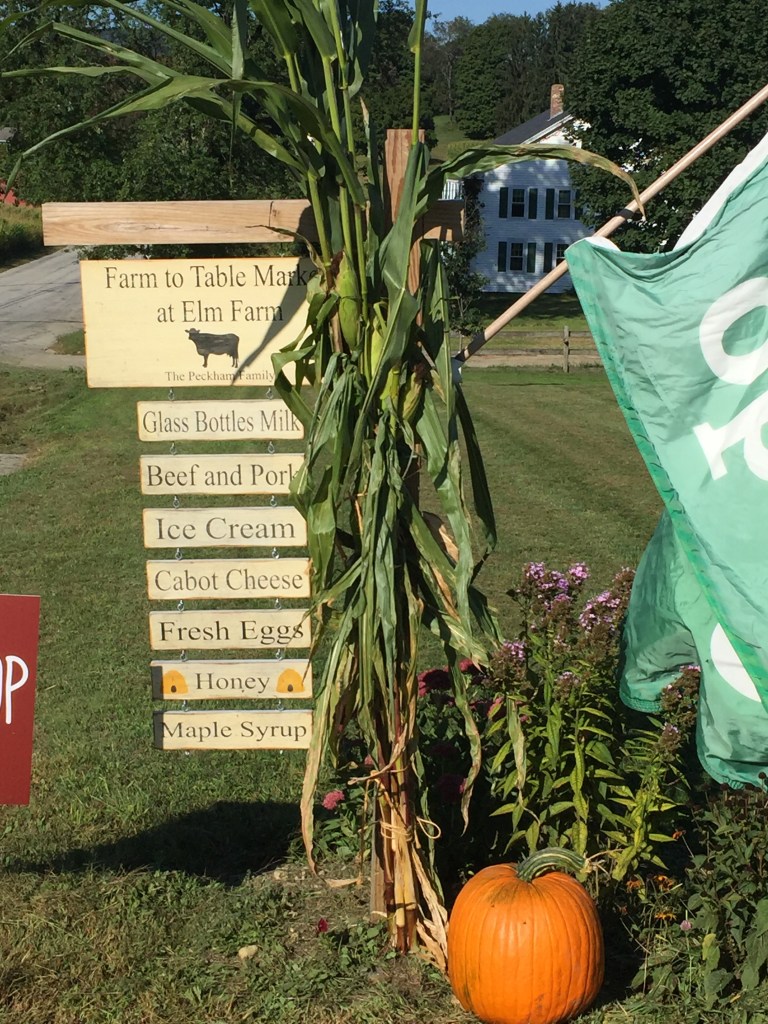
            Down another backroad is – amazingly – an ice cream stand. The cute Farm to Table Market gives visitors the chance to stock up on farm products before they wander outside to enjoy creamy dairy treats while communing with the cows in a nearby field.

The Farm to Table Market in East Woodstock

            Churches can learn from the “can-do” spirit of the farmers. Society has changed and life is different than it was decades ago. Churches, like farms, need to adapt. The way it’s “always” been done may not work anymore. These farms are demonstrating a simple truth – we must find new ways to offer the valuable products we have. For farmers that might mean farm stands and new products. For churches it might mean creative scheduling and a willingness to dream of new ways to share Good News that the world needs to hear.

            Stop by a local farm and be inspired.

“Peaceful racists”

Some words just don’t fit together.  Like “sweet lemon” or “warm ice.”

Or – “peaceful racists.”

That’s how the organizer of the ridiculously named group “Super Happy Fun America” described participants in the abhorrent “Straight Pride” parade that took place in Boston last weekend.

“Peaceful racists” don’t exist.

Racism is, by definition, violent.

Racism excludes, demeans, ostracizes, and belittles.

Racism robs people of opportunities.

Racism denies people a voice.

Racism categorizes people based on their skin color, ethnicity, or nationality.

Racism refuses to recognize the complexity of human experience with all of its pain, experience, and joy.

Racism keeps people out instead of welcoming them in.

Racism hurts.

There are no “peaceful racists.”

 The poorly attended “straight pride” parade was a weak attempt at mimicking the glorious annual Gay Pride parade which celebrates humanity in all of its diversity. The Gay Pride parade is about widening the circle to ensure everyone can participate; it is a celebration of welcome and inclusion and revels in the vibrant richness of God’s people.

Let’s call racism what it is – despicable.

Instead, let’s live out words that go together well: Extravagant welcomer. Radical includer. Heartfelt sharer.  

And let’s share God’s love and welcome.

God’s Welcome Table

On Sunday we will celebrate communion during worship. Before the bread and the cup are shared, I will say, “Everyone is welcome at God’s table. Whether you have been here hundreds of times before or whether this is a first occasion, whether you are filled with faith or overcome with doubt, whether you are sure of who God is or whether you are searching for even a glimpse of God in your life, you are welcome here.”

Sometimes I use words like, “Everyone is welcome here – old, young, and in-between, gay, straight, transgender, and questioning, people of all races and cultures, all are welcome here.” Each month I wonder how to express the welcome that God offers. God’s inclusion is so broad that it can be challenging to express in words.

How should we describe it? Everyone is welcome here…

–       Those who need forgiveness and those who are seeking to forgive

–       Those who are addicted, those who are celebrating sobriety, those who are seeking to live life one day at a time

–       Those who are angry and seeking solace, those who are worried and searching for reassurance, those who are broken-hearted and feel as if they will never be happy again, those whose lives have been shattered by violence, illness, or loss

–       Those who are parents or grandparents who rejoice in love shared and those who review past moments with an aching regret, worrying about words spoken or unspoken to those they love.

–       Those overwhelmed by the responsibilities of care-giving who wonder if they will make it through one more day, one more meal prep, one more doctor’s visit, one more sleepless night

–       Those who feel permanently, constantly, achingly unwelcome because of their race, gender, or sexuality

–       Those who are overworked and those who are unemployed; those whose calendars are overbooked and those who yearn to fill empty days and hours

Who is welcome? All of us. Us, in all of our variations, differences, and commonalities. Every single one of us – we are welcome in God’s sight and invited to God’s table.

What joy, what relief, what reassurance.

Come and eat.

Taste and enjoy.

Receive the gifts of a loving God.

              This is the message, the Good News, that we – as the church and as individuals – are called to live out every day. We are meant to express and embody God’s love, forgiveness, and new life at work, at home, and in the world.

            Who do you know that needs that message of love, forgiveness, and inclusion?  How can you find a way to convey kindness and understanding?

And be sure to invite them to church sometime – let them know that they are always welcome here.  

The Caring Corner

What do we do about problems with no easy solutions? Every city and town confronts challenges and it is often unclear how to make a difference. During a recent visit to the small city of Newark Ohio (population: 48,000), I was impressed with a group of volunteers concerned about homelessness and addiction. What impressed me the most was their ability to identify not simply a problem to be solved but also recognize people who need help.  

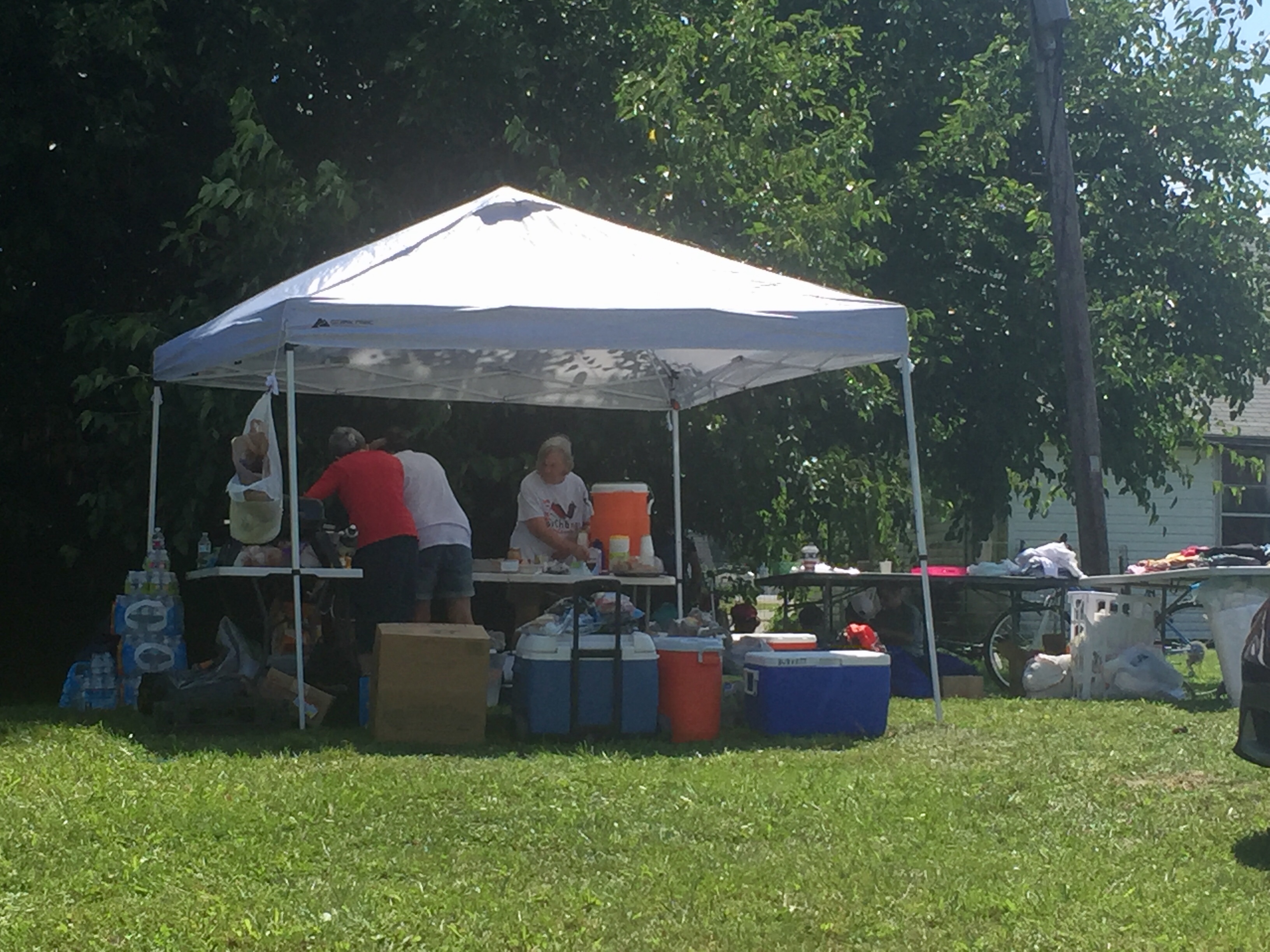
If you go to Newark on a Saturday morning all year long, you’ll see a white pop-up tent on a corner vacant lot across the street from the county jail and the sheriff’s office. Rickety folding tables hold cases of water bottles, sandwiches in plastic bags, and a few grocery items. An assortment of colorful plastic coolers surrounds the table. A few feet away a metal clothes rack displays shirts, sweaters, and jackets gently swaying in the breeze.

Volunteers greet people as they wander by. Some cluster in the shade, eager to get out of the blazing sunlight. Others straddle their bikes, rocking back and forth as they chat and stock up on supplies. Some sprawl out on the grass, grateful for a cold drink of water on a hot day.

This is the Caring Corner, a place where anyone can come to receive food or drink. My friend delivers a blue plastic cooler filled with frozen plastic water bottles. The arrival of this bounty causes some excitement among those gathered around the tables. They are anticipating just how good that cold bottle will feel pressed against their foreheads or necks. One of the challenges of living outside is the searing, oppressive heat. The ice will provide a brief respite and then offer cool water to these thirsty souls.

One of the offerings at the Caring Corner is fentanyl testing strips.  This was so far outside of my experience or knowledge base that it had to be explained to me.  Many (perhaps most) of the visitors to Caring Corner are heroin addicts. Street heroin is often mixed with the much stronger drug fentanyl. The testing strip allows the user to gauge how much they can inject to reduce the risk of an overdose.

My immediate reaction was – can’t we cure them? Help them conquer their addiction? The Caring Corner meets these mostly young men and women where they are and addresses their immediate needs. They are addicted, hungry, and thirsty. While I might wish to solve all of their challenges, they just want to stay alive today.

Sometimes we are able to provide a solution. Sometimes we are just helpers along someone’s path. I believe God calls us to meet people wherever they are on their journey and offer whatever help and support we can.

Lights for Liberty

I had planned to go to a lovely outdoor concert last Friday. I was looking forward to sitting with friends, enjoying a precious summer evening, relaxing under the trees as we listened to toe-tapping music.

But then I heard about the Lights for Liberty vigil.

 Gatherings were being held across the country on July 12th to raise awareness of the horrible conditions endured by refugees in detention camps in our country. Inspired by the light held by the Statue of Liberty, we are called into action by the poem inscribed on the monument’s base.  “The New Colossus” by  Emma Lazarus issues a moving invitation.  “Give me your tired, your poor, your huddled masses yearning to breathe free, the wretched refuse of your teeming shore. Send these, the homeless, tempest-tost to me, I lift my lamp beside the golden door!”

            I felt compelled to give up my concert plans so I could heed the call of these inspiring words. I wanted to stand in solidarity with hundreds of families who are waiting at our border to apply for asylum. It is not illegal to ask for help. They are simply waiting to be heard. Parents and children are trying to escape violence, terror, and hunger. They are drawn by Lady Liberty’s light of freedom and the promise of this country founded by immigrants. Yet these tired, poor homeless masses are being treated like criminals.

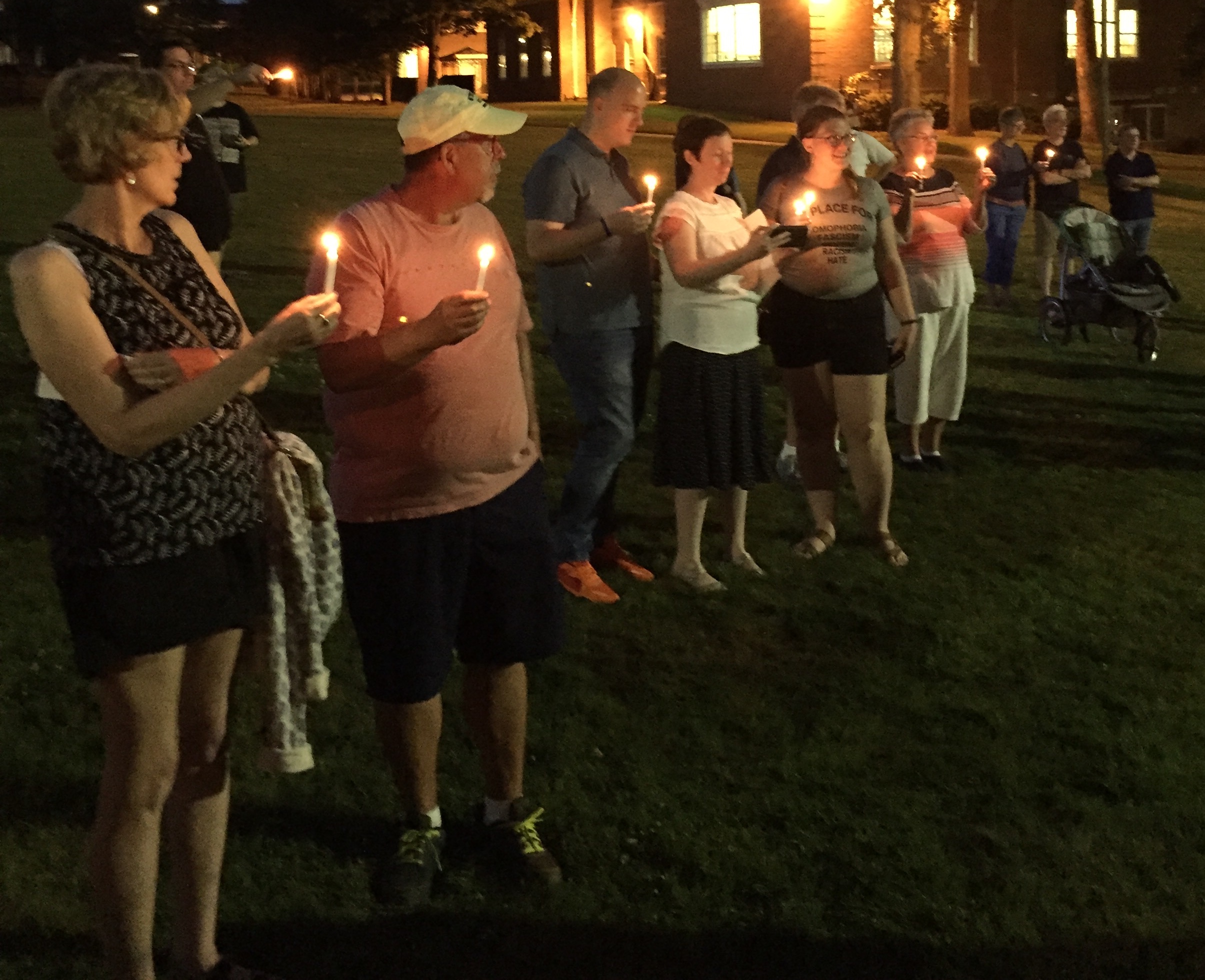
 So I joined dozens of others in a park in Manchester CT to listen to first-hand accounts of recently-arrived immigrants expressing their gratitude for a fresh start. I heard a speaker compare World War II era Japanese internment camps to the refugee holding areas on our border. I joined in the song “This Land is My Land” that celebrates our country that was “made for you and me.”  

And we lit candles. As dusk fell, people of all ages, faces glowing in the flickering light, promised to carry the beacons of hope and determination into our towns, states, and country. I went to the vigil because I believe that is where Jesus would stand – with the outcast, with the suffering, with those on the margins.

There will be another pleasant outdoor concert to enjoy. But the refugees need us now. I was glad to be surrounded by the compassion and strength of those who gathered to celebrate Lights for Liberty. Now I will continue to do what I can to spread the message of justice and liberty for all.

Celebrating with our neighbors

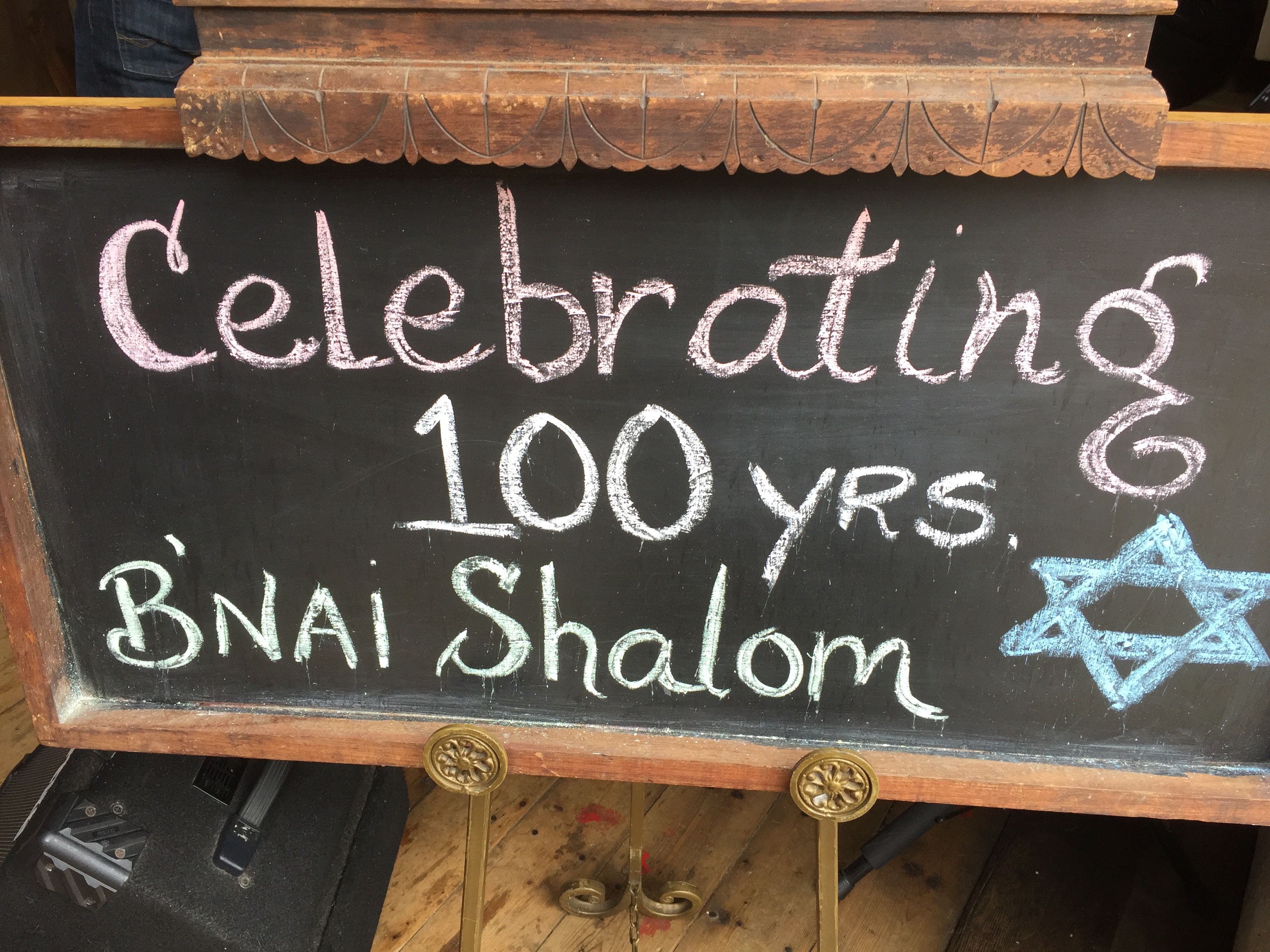
Who doesn’t like a party? And the folks from the B’Nai Shalom synagogue had a wonderful reason to celebrate – it was the 100th anniversary of the founding of their congregation.

            People gathered from far and wide to enjoy good food and wonderful fellowship as the congregation reflected on its past and prepared for a bright future. With a tiny Jewish population in northeastern Connecticut, this congregation has a strong tradition of lay leadership. They rely on volunteers to lead worship and community outreach. They enjoy a strong “can-do” spirit which allows them to work and worship together. In recent years, a rabbi comes once per month to lead services, offer education, and encourage them in leading lives of faith.

            It was my pleasure to be a guest at the festivities and have the opportunity to offer greetings from my congregation to theirs. In this angry and contentious era, it is vital to remember that there is more that unites us than divides us. Together we can serve a God of love and hospitality as we reach out to God’s people as our neighbors.

            Rabbi Eliana Falk wrote this prayer for the occasion:

Dear God, we are thankful for Your gifts and blessings that help us…

  • To be grateful for the ability to learn and understand, and to grow in wisdom,
  • To respond to Your commandment to pursue justice and mercy.
  • To be ever more humble in our use of the gifts by which our planet sustains us.
  • To be strong as we assist all who are in exile, all who suffer oppression.
  • To be fortified through chesed and tzedakah – loving kindness and justice.
  • To bring healing and comfort to all who are infirm, cast off and alone
  • To be fearless forces for good in a troubled world
  • To embrace our tradition of peace and learning, healing and joy
  • To commit to one another – to all of us who are present – and to all who are not present –
  • Reinforcing the unbreakable bonds we share with one another and the Holy One of Blessing.
  • To acknowledge that all of our blessings are Your gifts, and that the hundreds and thousands of miracles that You offer to us each day are invitations to become awake to the mystery that is beyond our vision, yet understood by our souls.

And so to the congregation B’Nai Shalom, I say a hearty “Mazel tov!” and add my best wishes for many more years of worship and service.  May you go “from strength to strength.”

Jamboree – it’s who we are

It happened again – I was trying to describe where our church is and which of the many Congregational churches in our area is actually East Woodstock. Then the light dawned – “Oh, is your church the Jamboree church?”  Yes, indeed.  That’s who we are.

            It’s a good way to be known. Yes, we’re the church that hosts an enormous party on the Fourth of the July. Yes, we’re the church that offers safe, old-fashioned fun for families. Yes, we’re the church that invites kids to play games, dance to music, and ride their bikes in the parade. Yes, we’re the church that encourages people to spend the day relaxing on the common as they listen to local musicians and enjoy delicious food. Yes, we’re the church that opens our doors and our hearts wide and says, “Come on in.”

            While I’m glad that hundreds of people will find their way here on the Fourth of July, I wish more people could experience the behind-the-scenes activity that makes that special day possible. The small but mighty Jamboree committee begins meeting and dreaming in February.

About 10 days prior to the big celebration, the church starts humming with activity as people stop by with donations of “treasures” and books.  I love listening to the laughter and conversations of volunteers as they sort, clean, and categorize the huge variety of items that will be for sale. It is not unusual to find people standing with bits and pieces in their hands, deep in conversation, as they take the chance to catch up with old friends or meet new ones. Sometimes a guessing game ensues – “What is this thing?” (The answers have been as varied as a cranberry scoop, a candle sharpener, and an apple peeler/corer).  Or reminiscing kicks in – “I remember these!  I used to have one when I was a kid.”  I have heard mini book reviews as people happen upon a favorite book and recount a much-loved story. It is a time of excitement and anticipation.

  Fellowship and community are a big part of the Jamboree and they begin long before the actual day.

The Jamboree started in 1957 when the church was short on funds. While this was not a particularly unusual situation, the solution was. A trio of creative women – Barbara Barrett, Nancy Lyons, and Betty Wells – imagined a one-time event to fill the budget gaps. They invited the community and people responded with enthusiasm. And thus, a tradition was born. This year we’ll celebrate our 63rd Jamboree.

Some things have changed over the decades. We no longer host a ham and bean supper in the evening (those hardy New Englanders!  How did they have the stamina to prepare a meal after a long day on the common?!) and the torch runners now carry flags representing our country, our state, and the thirteen colonies.

But the heart of the Jamboree remains the same. It is an invitation for people from near and far to come together. We celebrate our country and the freedoms we enjoy. We celebrate East Woodstock and give thanks for the church. It is a day filled with festivities and gratitude.

I look forward to celebrating the Fourth of July Jamboree and give thanks for all the volunteers – past and present – who make it possible.

Worrying about the children

I can’t get the children out of my mind. Refugee children in detention centers without soap or toothbrushes and sometimes without beds. Children who have been separated from their parents and who barely have enough to eat. Children forbidden to go outside to exercise or play.

            We didn’t invite them here. These children did not ask to be caught up in this violent and dangerous situation. Many do not want them here (I would urge the wealthiest country in the world to consider its obligation to help those less fortunate but that is an argument for another day). The fact remains – the children are here.  They are in our country. What will we do? The way we respond to the weak and desperate defines who we are as a nation. The world is watching. How will we react?

            When I think about the children in the migration centers, I think of my own children at that young age. I remember vividly how vulnerable they were when they were frightened or lonely or sick. When I think of these migrant children who are alone, cold, and afraid, I imagine them crying without comfort or care being provided.  It breaks my heart and makes me furious in equal measure.

            The argument has turned petty. Withholding toothbrushes? Refusing to allow them to shower or bathe? Rationing soap and confiscating blankets? Some would argue that harsh treatment will discourage additional refugees from entering our country. The idea that people are risking their lives in order to be treated inhumanely in detention centers defies logic. No one is crossing the border to get a clean toothbrush. Desperate parents are trying to save their lives and protect their children. They are risking everything in search of safety, security, and a chance for a new life.   

            Responding to thousands of refugees fleeing from countries filled with violence and danger is a huge challenge. Fear is driving them to our border. Our country needs to take action in this very human crisis. We don’t have to agree on immigration policy before we recognize our obligation to provide basic care for these homeless, hurting children.

Our country was founded by immigrants. We are known as a generous, caring country who rushes to the aid of people across the globe. Now those people are on our doorstep. We may not be able to find homes for all of them, but we can treat them with the dignity that all human beings deserve. If Congress cannot find a way to provide toiletries for children, the government should turn to faith communities and other non-profits. Provide 2000 toothbrushes?  We can do that in a heartbeat.

In the meantime, if you, like me, are looking for a concrete way to respond, you may choose to donate to agencies that are aiding refugees. Here are some:

The Florence Immigrant and Refugee Rights Project  

KIND: Kids in Need of Defense  

UCC Refugee Relief 

            I will pray that we will learn how to put “love your neighbor” into action.

What CAN you do?

A recent foot injury has led to some frustrating restrictions to my mobility. Standing for more than a few minutes is painful. Some of my favorite pastimes have been temporarily eliminated. My morning walks, which feed my spirit and brighten my mood, have been abandoned. Taking care of my flower gardens and communing with the birds as I feed them are put on hold for now.

            As the list of activities that I can’t do seemed to grow longer and longer, I was becoming annoyed and feeling slightly sorry for myself.

            I was lamenting my inability to exercise and enjoy the improving weather when my wise daughter observed, “Well, you could at least lift weights.” And bingo – a new perspective was introduced.  Instead of focusing on the impossible, I was invited to imagine something new.  Given my limitations, what could I do? It was an opportunity to be creative.  I discovered several activities that worked – not only weight-lifting, but also yoga, swimming, biking, kayaking, and stretching. I didn’t need to curl up on the couch in pathetic defeat; I needed to shift my thinking and recognize what I could do.

            Now I’m starting to expand that thinking to other dilemmas and problems. Often when a situation seems overwhelming, I find it easy or tempting to think, “Well, there’s nothing I can do.”  Prejudice against the LGBT community?  Can’t solve that. Systemic racism?  Where would I even start? Global warming? Oceans polluted by plastic? Children being separated by their parents on the border? There are any number of issues, from personal to global that feel unsolvable. It’s tempting to sink into inaction.

            And yet – my new thinking reminds me that I don’t have to come up with a complete answer. I don’t have to produce the entire solution.  I just need to do what I can do. Maybe I can’t change society’s thinking about the LGBT community, but I can march in a Pride Parade or invite conversation with a bumper sticker. I doubt I will overcome centuries of racism and discrimination single-handedly, but I can accept the challenge to educate myself about the experiences of people of color and pledge to recognize moments of racism in myself and others.

            What can I do?  Pick up trash on the side of the road? Greet surly clerks with compassion? Send a card or email to a long-lost friend? What small action might be part of a larger answer?

There may not be a neat solution for every problem. But that isn’t an invitation to inaction. It’s a call (to quote John Wesley) to “Do all the good you can, by all the means you can, in all the ways you can, at all times you can, to all the people you can, as long as ever you can.”